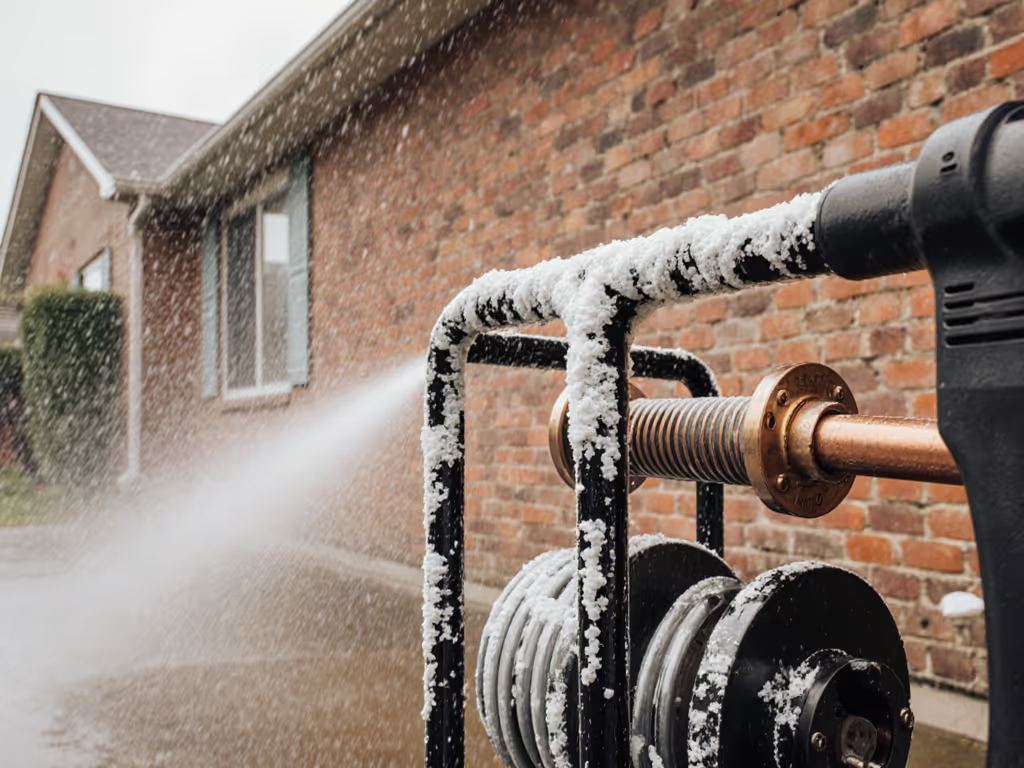
Well Water Pressure Washers: PSI & Flow Guide
By Kai Mendes • 31st Mar
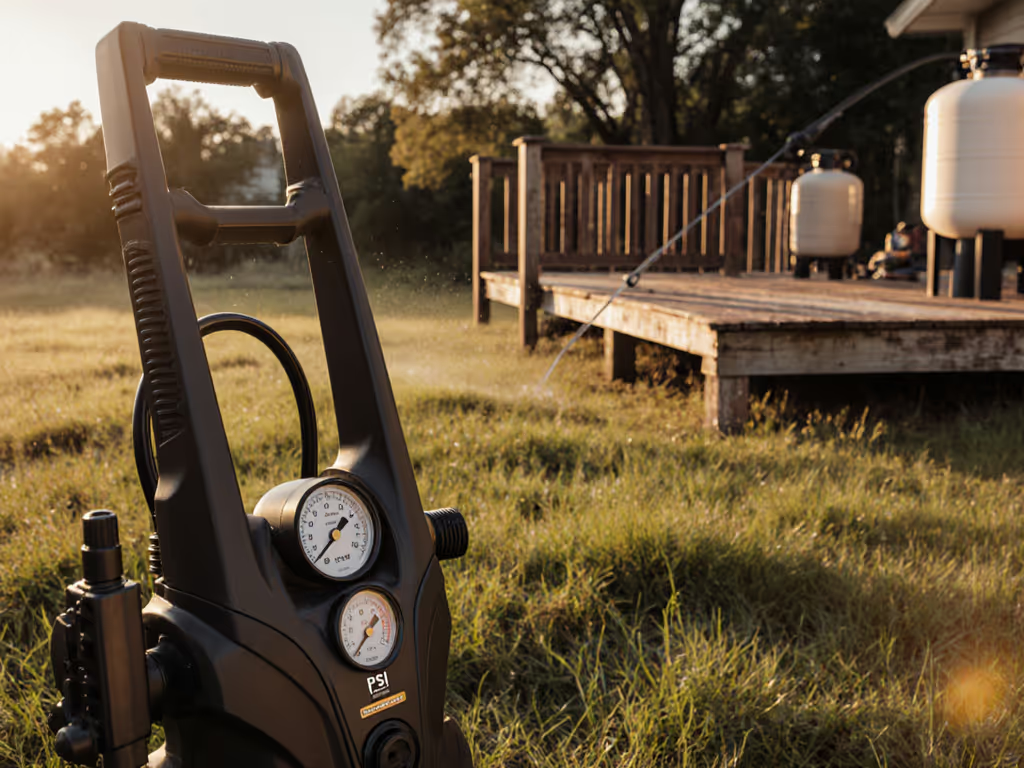
Pressure Washers and Well Water: Why the Numbers Matter
If you're running a pressure washer on well water, you're facing a constraint most municipal-water users never encounter: your system's PSI and GPM ceiling is fixed by your well pump and pressure tank, not by infinite grid supply. This isn't a minor detail, it directly shapes what surfaces you can clean, how fast you can work, and whether you risk damaging your well pump through sustained demand. The challenge is translating your well's capabilities into real cleaning performance. Test, don't guess. The only way to know if your well system can handle the job is to measure pressure and flow together under load. For a refresher on how PSI and GPM work together, see our PSI vs GPM guide.
How Much PSI/GPM Do I Need, and What Does My Well Actually Provide?
Typical residential well pump protection systems operate on switch settings like 30/50, 40/60, or 50/70 PSI. Most wells maintain pressure between 40 and 60 PSI, which is the comfortable range for home plumbing fixtures and appliances.
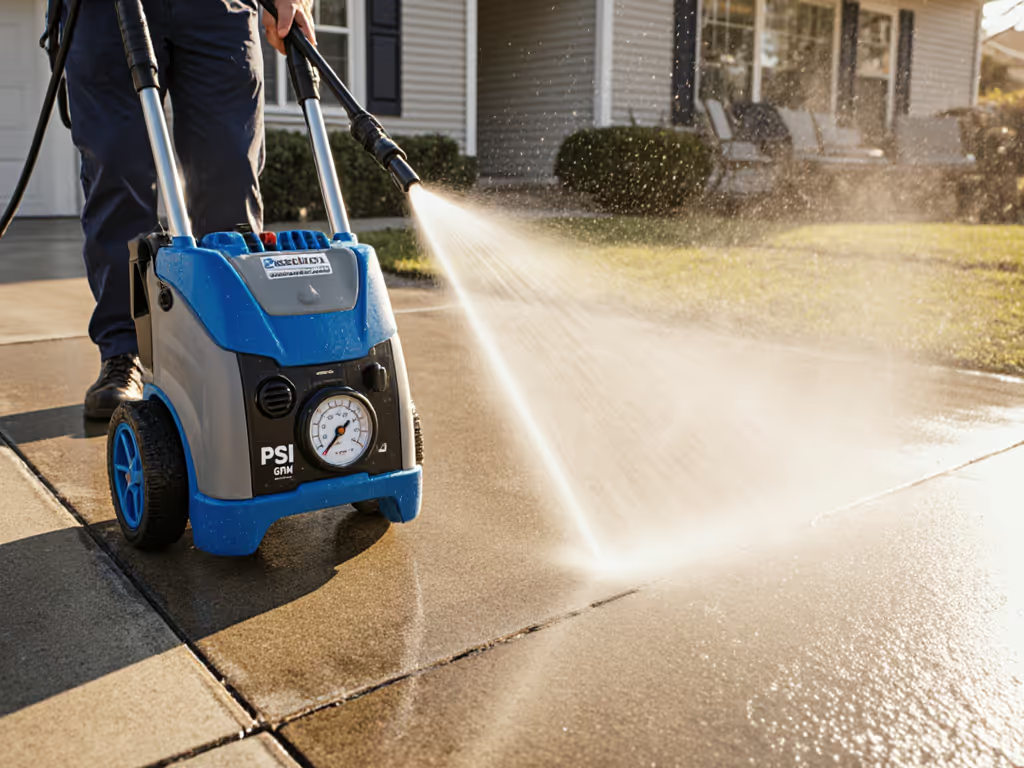
Most pressure washers demand far more. Entry-level units pull 1000-1900 PSI, mid-range models run 2000-3900 PSI, and commercial units exceed 4000 PSI. Your well system is not designed to supply these pressures continuously, the pressure washer creates its own PSI by forcing your well's water through a narrow orifice at high velocity.
The real bottleneck is well water flow rate (GPM). Most residential wells deliver 5-15 GPM under normal household load. A typical pressure washer will consume 1.5-4 GPM depending on nozzle orifice size. Run a pressure washer directly from your well spigot during a shower or washing machine cycle, and you'll trigger pressure drop, unloader cycling, and potential pump strain. For setup diagrams and fixes for low-pressure feeds, check our water supply troubleshooting guide.
The answer: stage your water draw through a pressure tank. A properly sized tank decouples your pressure washer's instantaneous demand from your pump's recovery rate, protecting both devices. Without one, your pump cycles on and off repeatedly, shortening its lifespan.
Setting Realistic Expectations: What Surfaces Can You Clean with Well Water?
Light duty (decks, bikes, grills): A 1000-1900 PSI rig paired with a 40/60 or 50/70 well pump switch works reliably if your home is single-story or two-story without upper-floor fixtures drawing simultaneously. You'll achieve steady pressure for deck cleaning, siding rinse, and vehicle washing without taxing the pump.
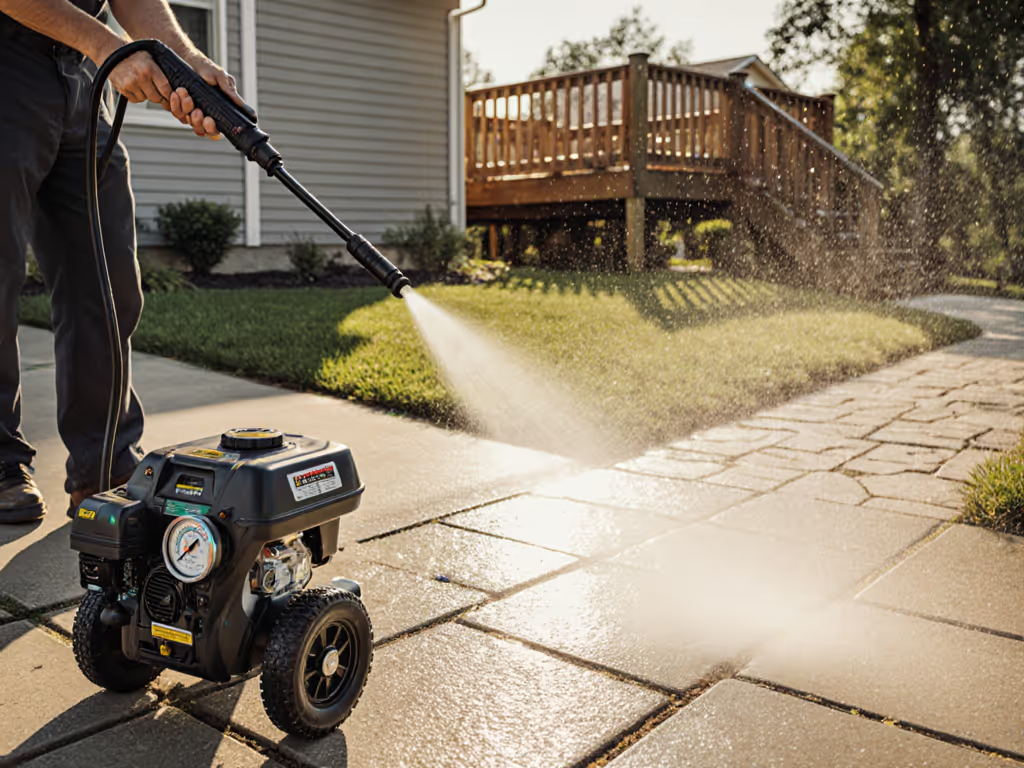
Medium duty (driveways, fencing, siding): Here's where well water flow rate becomes the limiting factor. A cracked driveway (my benchmark) tells the full story. I ran two rigs back-to-back: 2.4 GPM with a 40° tip versus 1.8 GPM with a 25°. The higher flow, wider fan cleared a lane in half the time, used 18% less water per square foot, and read 3 dB quieter at the fence. That test showed me that a 40/60 well system (typically 8-12 GPM sustained) is marginal for aggressive medium-duty work if your pump can't recover fast enough between trigger pulls.
Heavy duty (industrial, paint stripping): Not recommended for well-only setups unless you have a dedicated commercial well or a tank-fed system with supplemental storage. Most residential wells cannot sustain the 3-5 GPM demand of a 4000+ PSI rig for more than a few minutes without pressure collapse.
Measuring Your Well's Output and Pressure Under Load
Before buying a pressure washer, measure your actual well system's response:
- Static pressure: Check your pressure gauge when no water is flowing. Note the reading (likely 40-60 PSI for a standard well).
- Dynamic pressure under load: Turn on a full-flow outdoor faucet or garden hose (not the washing machine or shower yet). Watch your pressure gauge drop. This is your available pressure headroom.
- Flow rate: Time how long it takes to fill a 5-gallon bucket from the spigot. If it takes 60 seconds, you're at 5 GPM. This is your maximum continuous draw without triggering pump cycling.
- Elevation penalty: If your home is 30+ feet above your pressure tank, subtract 0.433 PSI per foot of rise. A top-floor bathroom 30 feet up needs ~13 PSI just to reach the fixture (reduce your available working pressure accordingly).
Your formula: Steady GPM ÷ (pressure drop × orifice efficiency) = realistic cleaning rate. If your well delivers 8 GPM at 50 PSI under load, you can run a 2.0 GPM pressure washer and still operate within your pump's comfort zone.
Low Pressure Solutions and Well Pump Protection
If your well pressure is below 40 PSI or your pump cycles frequently under washer load, consider these strategies:
1. Install or upgrade your pressure tank – A larger tank (80-120 gallons for most homes) smooths flow, reduces pump starts, and gives you a water buffer. Tank volume matters: a 50/70 system with a 120-gallon tank can sustain short bursts of 3-4 GPM without pump cycling.
2. Add sediment filtration before the pressure washer – Well water often contains sand, silt, and mineral deposits. Sediment clogs pump intake ports and nozzles, forcing higher PSI to compensate. A 25-micron or 50-micron sediment filter upstream protects both your pump and your washer's unloader. See our pressure washer water filtration comparison for filter options that handle hard water and grit. Check the filter monthly during heavy-use seasons; a clogged filter reduces flow and stresses the pump.
3. Use a lower-GPM pressure washer – A 1.5-2.0 GPM unit at 2500-3000 PSI delivers adequate power for most residential surfaces without overwhelming your well's recovery rate. Cleaning rate (sq ft/min) depends more on nozzle angle and dwell time than on PSI alone. Learn how to match PSI × GPM using Cleaning Units (CU) for faster, water-smart results. A 25° tip at 2500 PSI clears composite decking faster and safer than a 15° at 4000 PSI; it just requires a slower stroke.
4. Limit concurrent household water use – Run your pressure washer during low-demand hours (early morning, evening) when showers and laundry are off. This keeps pump pressure stable and prevents the kind of cycling that triggers unloader chatter and wears seals.
5. Monitor discharge pressure – Attach a gauge to your pressure washer output. If it drops below 1500 PSI under load, your well cannot sustain that nozzle size. Switch to a larger orifice (coarser tip angle) or reduce pump speed if your washer has a throttle option. Higher pressure means lower GPM through the orifice; that trade-off is how you match demand to supply.
Detergent and Sediment Filtration in Well-Water Systems
Well water typically contains minerals (calcium, magnesium) and sometimes iron bacteria or silt. These interact with power washer pressure detergents unpredictably. A detergent formulated for soft, chlorinated municipal water may leave streaks or residue on well-water cleaning jobs because the minerals alter dwell time and rinsing behavior.
Always flush your system with a 25-50 micron sediment filter before adding detergent. Sediment clogs foam cannons and proportioning injectors, forcing you to operate at lower GPM or higher PSI to compensate, both damage your well pump's cycle profile. Replace the filter if you notice a pressure drop of more than 10 PSI during operation.
Putting It Together: A Setup Recipe for Well-Water Pressure Washing
- Know your well: Pressure tank setting (30/50, 40/60, or 50/70), tank size, and measured GPM under load.
- Choose your washer: Match GPM to your well's flow (typically 1.8-2.5 GPM for residential wells), and PSI to your target surfaces (2000-3500 PSI for decks, siding, driveways).
- Add a sediment filter: 25-50 micron upstream. Check monthly.
- Size your orifice and tip angle: Run a test lane on your target surface at the widest angle and lowest PSI first. Tighten the tip only if cleaning is incomplete, never force it.
- Log your metrics: Time the job, measure water drawn (fill the tank before and after), and record finish quality. Did it take 90 minutes or 150? Did you use 400 gallons or 250? These numbers inform your next job and prove whether your setup is efficient.
What's Your Next Step?
If your well pressure reads below 40 PSI or your pump sounds labored when you run outdoor water, have a well service professional test your system's recovery rate under sustained load. A pressure gauge ($15-30) installed on your spigot is the cheapest insurance policy you can buy. Measure once, optimize forever. Most DIYers and small operators never log these baseline numbers, which means they buy the wrong pressure washer class and blame the equipment instead of the source. You can do better. Measure your well's capability, match your washer to it, and verify results with real data. That discipline pays for itself in the first job.
Related Articles