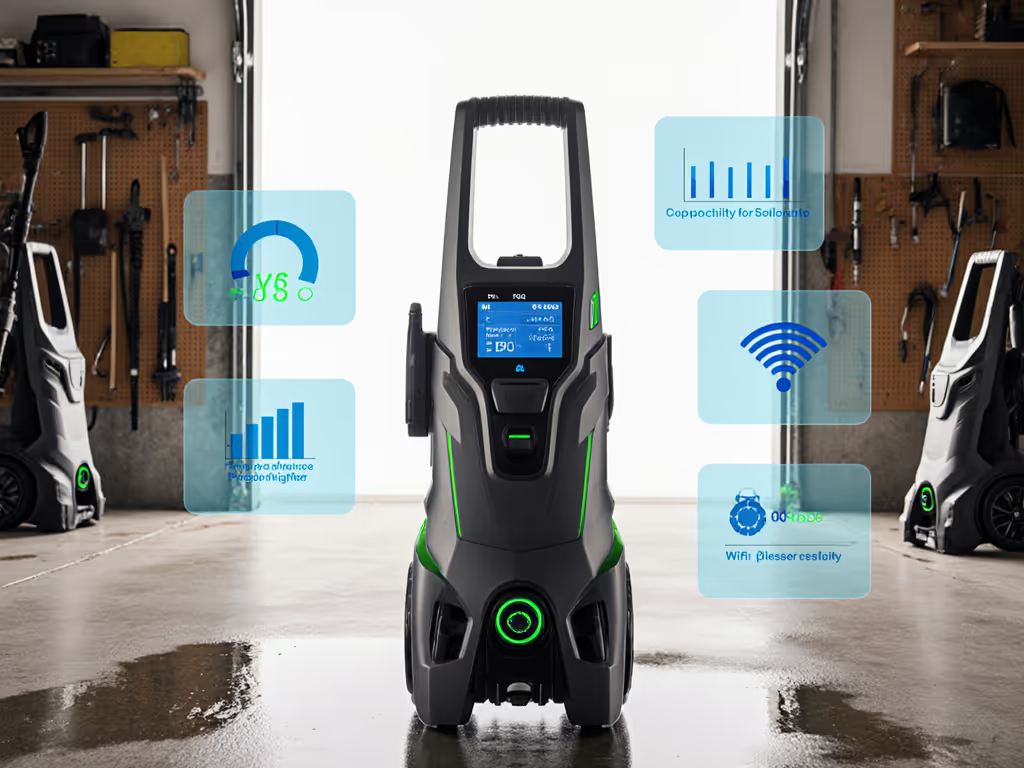
Professional Pressure Washers for Apartments: Rated & Compared
By Maya Okafor • 20th Apr
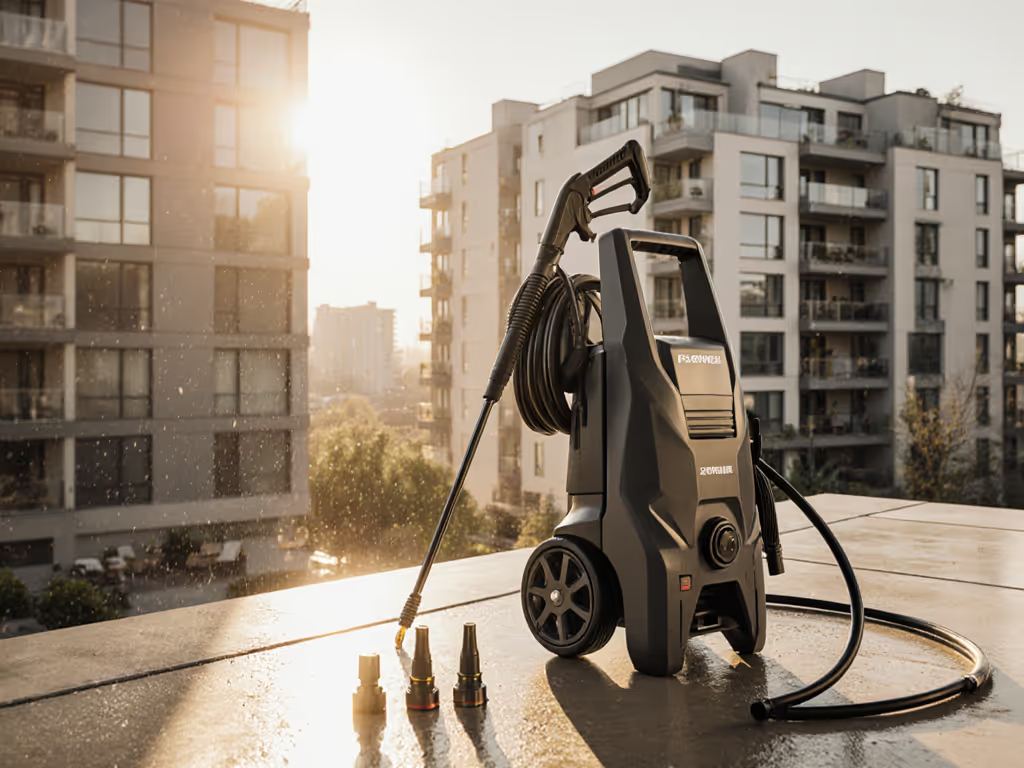
A professional pressure washer for apartment complex cleaning must balance raw cleaning power with finish protection, noise compliance, and water efficiency (three demands that often conflict in residential settings). This guide compares the specs, durability, and real-world performance of machines suited to multi-unit properties and HOA-governed grounds, helping you navigate the fog between consumer hype and actual apartment-scale requirements. For property-wide constraints like noise and shared spaces, see our apartment complex pressure washing guide.
Understanding Pressure and Flow: The Foundation
What Do PSI and GPM Actually Tell You?
Pressure (measured in PSI) controls cleaning force, while flow (measured in GPM) determines how much water carries debris away. The balance between these two is everything. For a deeper breakdown, see our PSI vs GPM surface-first guide. Too much pressure risks etching pavers, stripping siding, or blowing mortar from brick joints on apartment buildings. Too little pressure leaves biofilm clinging to surfaces, requiring costly rework.
For apartment complexes with mixed surfaces (painted stucco, composite siding, deck boards, and concrete), you are rarely choosing one machine to dominate all surfaces. Instead, you are selecting a machine that can deliver adequate flow (the quantity workhorse) while running at moderate PSI with chemistry-forward pre-wash recipes. The higher the GPM rating, the more surface area a pressure washer can clean in a minute. This matters immensely on large properties: a washer with 4 GPM covers twice as much ground per hour as one with 2 GPM, cutting labor time in half.
Chemistry does the heavy lift; pressure just rinses smartly.
This principle is non-negotiable in apartment settings, where residents occupy adjacent units and every surface (from wooden railings to aluminum trim to painted concrete) requires a different touch.
Nozzle Selection and Finish Protection
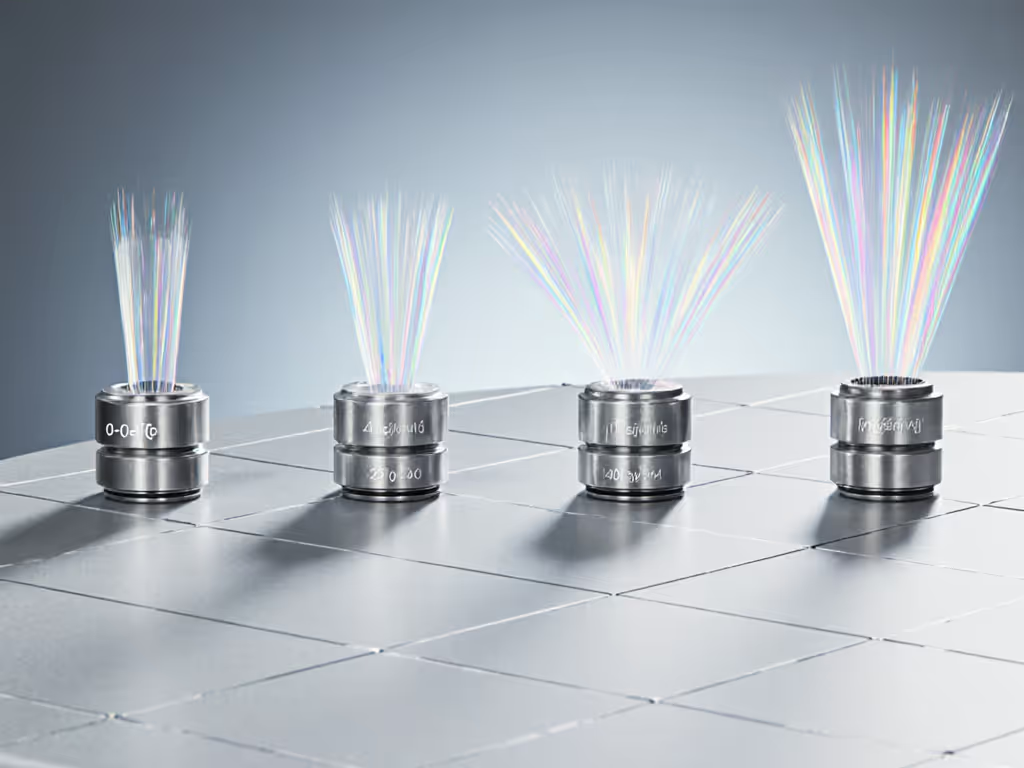
Most professional systems ship with interchangeable quick-connect nozzles at various angles: 0°, 15°, 25°, 40°, and soap tips. A 25-degree nozzle is the workhorse for general apartment grounds (decks, patios, and lightly soiled siding), because it spreads the pressure over a wider area, reducing the risk of localized damage. For delicate coated metals and fresh paint, a 40-degree or even a soap pre-wash nozzle (which runs at near-zero pressure while drawing detergent) is your first move, not your last resort.
FAQ: Choosing for Apartment and Multi-Unit Properties
What PSI Range Is Safe for Painted Siding and Composite Materials?
Most painted apartment siding (stucco, vinyl, fiber cement) should not exceed 1500 to 1800 PSI. If you are cleaning aluminum trim or painted stucco rails, you are looking at the lower end. The mistake many operators make is assuming they need one best pressure for all surfaces. Instead, adjust your nozzle fan angle and standoff distance: keep nozzles farther back and wider. Rinse at a wider angle, maintaining at least 18 to 24 inches from the surface to avoid tiger-striping (uneven pressure lines) on siding.
Composite decking and wood railings are even more vulnerable. Pressures above 1200 PSI can raise the grain or cause splintering. But here is where apartment operators often falter: they compensate by adding detergent and extending dwell time, then rinse at full pressure to save time. This is backwards. A mild pre-wash (chelating soap for mineral-stained composite, a biodegradable surfactant for algae), plus a longer contact time and moderate pressure (800 to 1000 PSI) at a wider angle delivers cleaner results and preserves the finish.
One property manager reported that her wooden railings developed a dull, chalky appearance under standard high-pressure rinsing. The solution: switch to a foam pre-wash with a gentle chelating formula, extend dwell to 10 minutes, and rinse at 1000 PSI from farther back. The railings not only stopped streaking, their original gloss actually improved, and the trim stayed pristine. This is the power of contact minimization and chemistry-forward methodology.
How Does Noise Compliance Fit Into Equipment Choice?
HOA noise compliance is a real constraint in apartment complexes. Gas pressure washers typically run 80 to 90 decibels, while electric models range from 65 to 75 decibels. Compare models in our quiet pressure washer dB rankings to find HOA-friendly options. Many HOAs enforce quiet hours (7 AM to 7 PM on weekdays) or cap noise at 75 decibels. If your complex is in a dense residential area, electric or dual-fuel models become mandatory.
Electric washers sacrifice runtime but gain silence and zero emissions. For apartment maintenance teams cleaning 2 to 3 properties per week, an electric unit (3000 to 4000 PSI, 3 to 4 GPM) paired with a foam cannon pre-wash strategy delivers professional results without neighbor complaints. Gas units are overkill for most apartment grounds; their 4000+ PSI is designed for concrete cleaning, not finish-protective work.
What is the Real Water Budget for Large Properties?
A typical apartment complex with 50 units, including parking areas, courtyard pavers, siding, roofs (if low-slope), and common decks, consumes 2000 to 5000 gallons per deep clean, depending on dirt load and technique. In drought-restricted regions or where water costs spike during summer, this matters. Operators often ask: Can I use less water? Yes, but not by lowering GPM. Instead, reduce idle time, use foam pre-wash to extend dwell without more rinsing, and employ wider nozzle fan angles (40° or greater) to avoid oversaturation.
A chelating pre-foam takes 10 minutes to work, during which zero pressure is applied. Then a quick, moderate-pressure rinse removes the dissolved minerals. Total water savings: 30 to 40% versus blind high-pressure rinsing, while achieving superior runoff control and surface safety.
Which Machines Excel at High-Usage Durability?
High-usage durability demands commercial-grade components: brass or stainless fittings, triplex or solid-state pumps rated for 500+ hours annually, and thermal protection or bypass unloaders to handle trigger-off cycles (when the gun is released, pressure must vent to avoid pump damage).
Professional machines in the 3000 to 4200 PSI, 3.5 to 4 GPM range are the sweet spot. They are robust enough for daily apartment rounds but not so overkill that they demand constant choke-down or create unnecessary noise and operator fatigue. Look for machines with:
- Triplex or axial-cam pumps (not wobble-plate): more durable under sustained use.
- Thermal protection or automatic bypass: if the trigger is held for more than 5 to 10 seconds without pulling, pressure relief opens to protect the pump.
- Hose and nozzle compatibility: confirm your high-pressure hose matches the PSI rating and your quick-connect tips fit the gun. Undersized hoses create flow restriction, bogging the pump and overheating the motor.
- Oil-cooled engine or integrated heat exchanger: essential for all-day runtime in hot climates.
How Do Commercial and Prosumer Models Compare?
The line between prosumer and commercial is blurry. For a data-backed breakdown, see our pro vs consumer comparison. Prosumer models (2500 to 3500 PSI, 2.5 to 3.5 GPM) are engineered for 100 to 200 hours per year, ideal for a homeowner or HOA grounds keeper cleaning once or twice monthly. Commercial high pressure washer units (3000 to 4200 PSI, 3 to 4 GPM) are built for 300 to 500+ hours annually, the domain of mobile detailers, apartment maintenance, or property managers juggling 5 to 10 buildings.
The durability gap is real: commercial pumps have thicker bore tolerances and better seals; engines have load-sensing governors to prevent over-revving. The price gap is also real: a prosumer washer runs $1500 to $3000, while a commercial equivalent is $3500 to $6500. For apartment use, if you are cleaning more than once monthly or serving multiple properties, commercial is the floor, not the ceiling.
What Does Total Cost of Ownership Include?
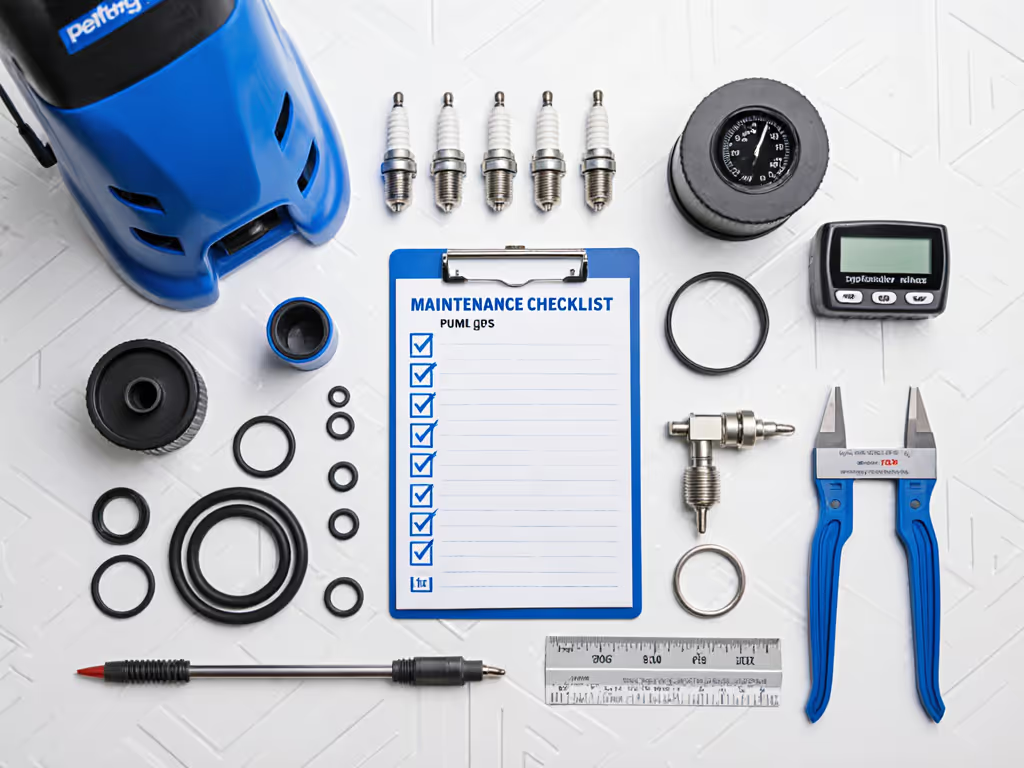
Beyond the purchase price, budget for:
- Pump and seal service: every 200 to 300 hours (2 to 3 years for daily users), replacing pump seals and rings costs $200 to $400.
- Spark plugs and air filters: annualized, $50 to $100 (gas units).
- High-pressure hose and quick-connects: replaced every 2 to 3 years or sooner if kinked; $100 to $200 per hose.
- Nozzle orifice replacement: tips wear and flow erodes; budget $15 to $30 per tip, replace annually if used frequently.
- Detergent and chelation compounds: ongoing; $10 to $30 per job depending on property size.
- Maintenance and repairs: oil changes, unloader valve adjustments, and hose reel maintenance; $100 to $300 per year.
A commercial machine earning its keep over 5 years (1500 to 2000 operating hours) at $50 to $100 per apartment complex pressure washer job will pay for itself while staying reliable. Prosumer units rarely justify the labor cost if you are billing clients; commercial grade is the math that works.
How Do You Manage Finish Safety and Runoff Compliance?
Contact minimization and runoff control are legal and ethical imperatives. Before any high-pressure operation, identify landscaping, painted trim, and sensitive materials that need shielding. Foam pre-wash systems excel here: they allow you to apply detergent to target areas (for example, algae-stained stucco) without oversaturation of nearby plants. Most states and municipalities now require containment of detergent runoff or proof that biodegradable, plant-safe formulations were used.
Use a surfactant-based pre-wash (not bleach) on composite decks and painted surfaces. Let it dwell for 5 to 10 minutes. Then, rinse at a wider angle from farther back, never perpendicular to the surface. This glancing angle reduces PSI concentration and minimizes etching risk. For apartment railings and trim, 40-degree nozzles are your friend; they spread the pressure force across a wider swath, turning an aggressive spray into a gentle cascade.
What to Look For in a Comparison
When evaluating professional pressure washer options for apartments, beyond PSI and GPM, check:
- Warranty and dealer network: commercial machines should carry 2 to 3 year pump warranties and local service support.
- Noise rating: published decibel levels (not estimated) matter for HOA compliance.
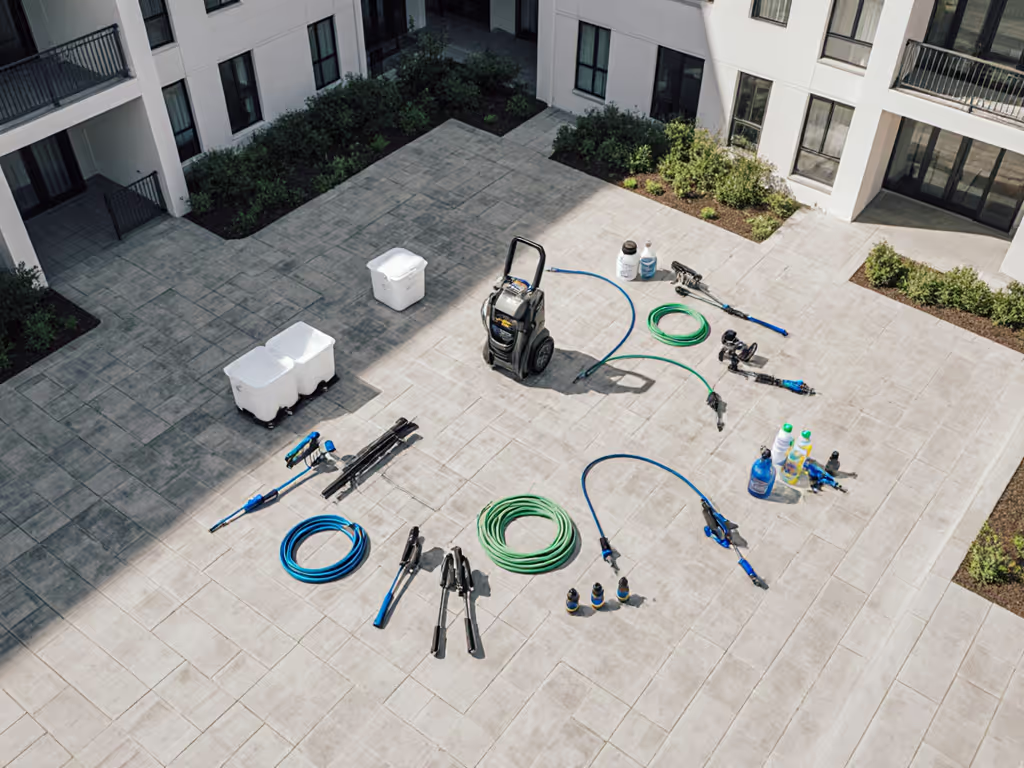
- Hose and accessory sizing: confirm that surface cleaners, foam cannons, and extension wands are rated for the machine's GPM. A 4 GPM washer paired with a 2 GPM surface cleaner creates a bottleneck.
- Thermal relief and bypass: essential for safety on long idle cycles.
- Parts availability and cost: common pump, motor, and seal kits should be in stock locally, not special-order.
- User community and recipe library: professional networks and forums (Reddit, GarageJournal, contractor groups) reveal real-world performance, common failure modes, and proven detergent/nozzle combinations.
Continuing Your Pressure Washing Mastery
The path forward depends on your specific surfaces, water constraints, and noise limits. If you are managing an apartment property with mixed finishes (wood, composite, stucco, concrete), start by mapping each surface, documenting its age and current condition, and testing a mild pre-wash plus moderate-pressure recipe on a small area. This test patch approach, backed by clear before-and-after photos, builds confidence and prevents costly mistakes.
Dive deeper into your local water and noise ordinances, connect with other property managers or mobile operators in your region to learn what machines they've relied on for multi-year service, and experiment with foam pre-wash systems if you have not already. Explore professional detergent lines designed for chelation and biofilm removal, test nozzle fan angles on hidden surfaces before committing to a full property clean, and map out your runoff control strategy before the first spray. Chemistry does the heavy lift; pressure just rinses smartly, and nowhere is that truth more important than in densely occupied, finish-sensitive apartment environments.
Related Articles