Hot Water Pressure Washers for Home Workshops: Tested & Compared
By Maya Okafor • 4th Apr
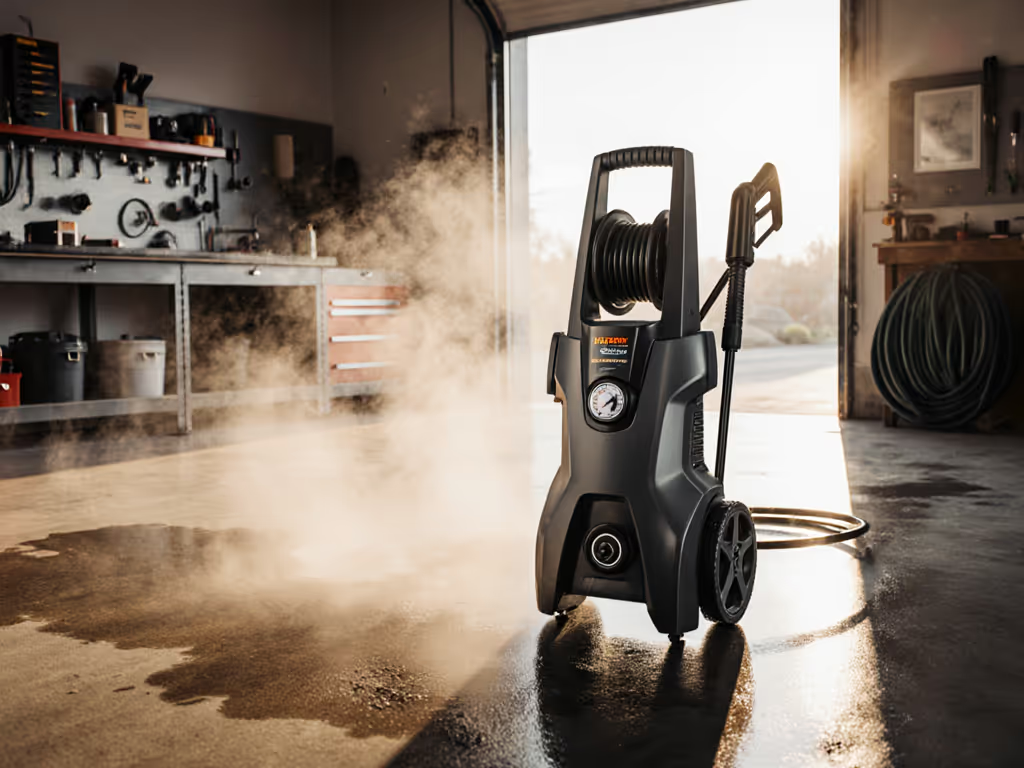
Why Your Workshop Needs Heat (Not Just Pressure)
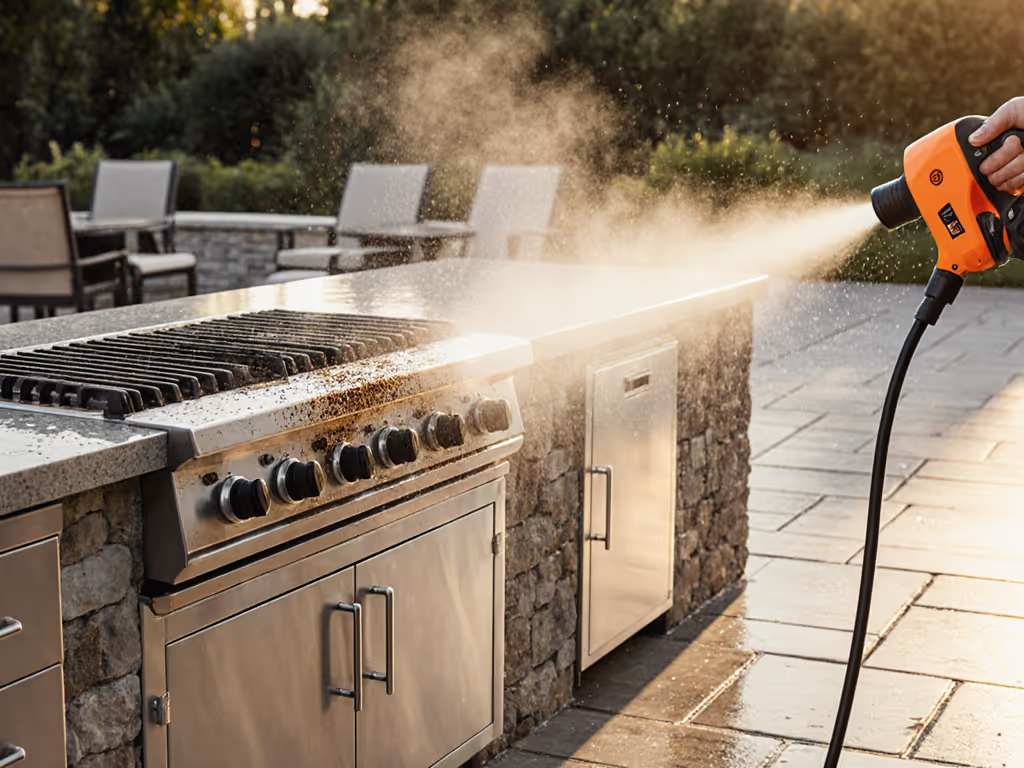
When you're staring at a greasy engine block, oxidized aluminum trim, or oil-stained concrete in your driveway, a standard cold-water pressure washer becomes your nemesis. An industrial hot water pressure washer or electric hot pressure washer solves that problem by heating water to 120-250°F and chemically dissolving residues that pressure alone cannot budge. Unlike cold water (which merely displaces oils and leaves them to resettle), heated water breaks molecular bonds in grease and grime, meaning you finish faster, use less detergent, and avoid the aggressive pressure escalation that threatens delicate trim and coatings.
For DIY workshop owners, choosing between fuel-fired and all-electric models isn't just about power; it's about surface safety, operating costs, and matching your actual workload to the tool you'll maintain and store. This FAQ digs into the tested differences, specification confusion, and practical recipes that separate wishful thinking from results.
Understanding PSI, GPM, and Temperature: What Actually Matters
Why PSI Alone Is Misleading
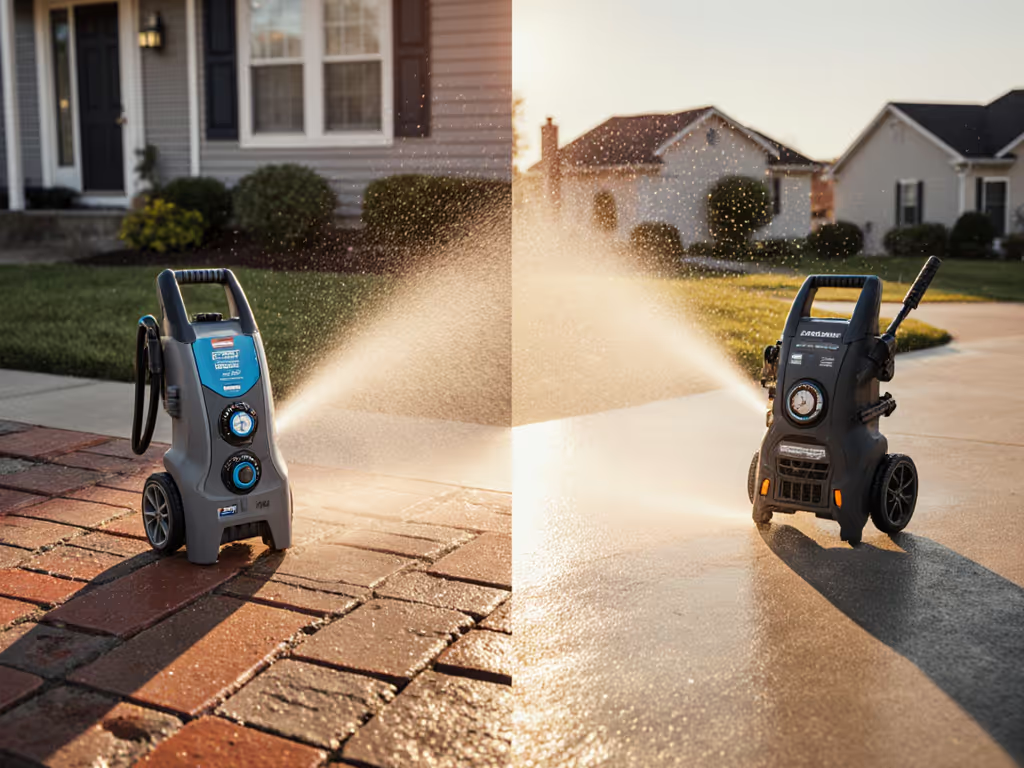
Pressure alone is seductive ("4000 PSI sounds powerful!"), but it's half the story. A popular hot-water model pairs a Honda GX390 engine with a General Triplex ceramic plunger pump, delivering 4.0 GPM at 4000 PSI with a 132-degree temperature rise. That's volume (GPM) meeting force (PSI) at energy (heat). If you chase PSI without GPM, you're spray-painting dirt, not washing it away—see our PSI vs GPM guide for how flow and pressure work together. Conversely, high GPM and low PSI work beautifully for foam pre-wash stages (where chemistry does the heavy lift and pressure just rinses smartly), but they falter on cured stains.
Temperature as a Chemical Multiplier
Heat is your ally when finish protection is the goal. Hotter water dissolves grease faster, reducing the need to dwell with aggressive detergents or hold a narrow nozzle tip close to delicate surfaces. For home workshops tackling everything from engine bays to fence stain removal, water temperature in the 130-160°F range strikes a balance: hot enough to emulsify oils and accelerate chelating soaps, yet cool enough to avoid thermal shock on wood or thin aluminum. Going to 225°F or higher is overkill for DIY work and risks stripping wax or accelerating UV damage on outdoor trim. For a deeper breakdown of when hot versus cold water makes sense, see our hot vs cold pressure washer analysis.
Electric vs. Fuel-Fired: The Trade-Off Matrix
Electric Hot Water Pressure Washers: Lower Maintenance, Limited Autonomy
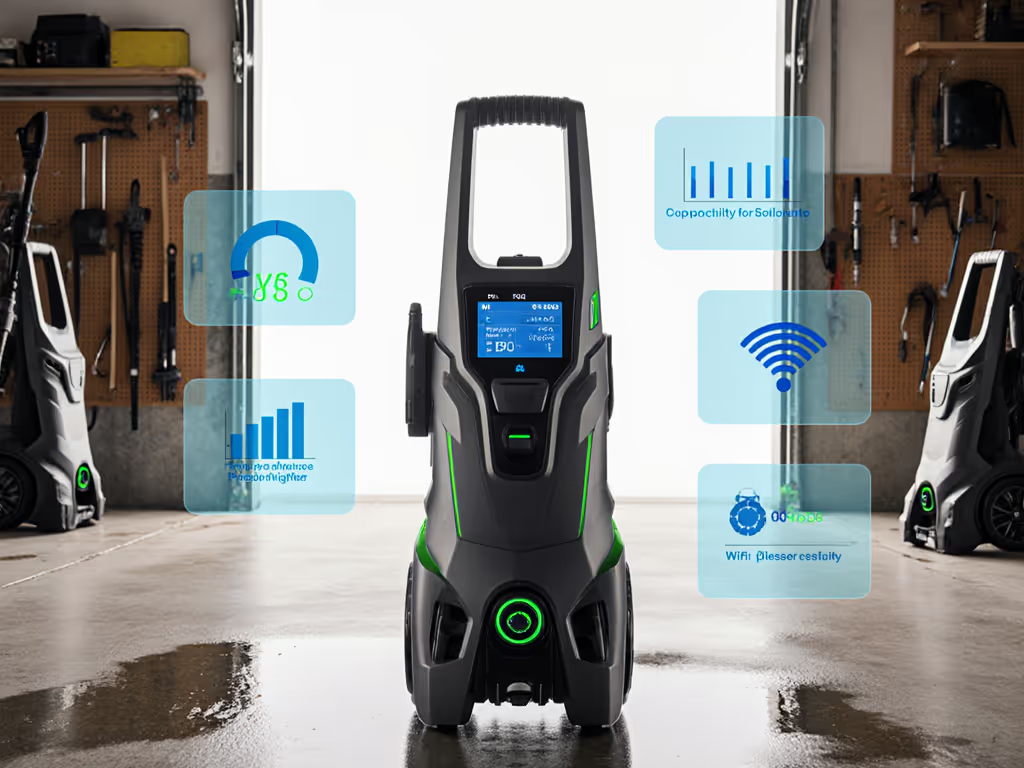
Most electric hot-water units require fuel (diesel, LP, or natural gas) to power the heater burner, except Mi-T-M's all-electric HAE model, which uses a heat exchanger to maintain water temperature. The advantage of all-electric is simplicity: no engine tune-ups, no seasonal fuel stabilization, and quieter operation (often critical in suburban settings with noise ordinances). If noise is a concern where you live, compare models in our quiet pressure washer dB rankings. The trade-off is tethering: you're limited by household electrical service (120V or 230V outlets) and extension cord losses, meaning shorter cord runs and higher amperage demand than portable gas units.
For a homeowner in a townhome or dense suburb, all-electric avoids neighbor friction. For someone with a detached shop and a heavy 30-amp circuit, it's viable. For mobile operators or properties with unreliable power, it's a non-starter.
Fuel-Fired Systems: Portability and Raw Energy, with Maintenance Burden
Industrial hot water pressure washers powered by diesel, LP, or natural gas offer true portability and no electrical dependency. They scale from 2-3.5 GPM at up to 2400 PSI for compact trailer units, up to 10+ GPM at 3500+ PSI for heavy-duty industrial rigs. A diesel-heated unit can sit idle and start cleanly next weekend; a 230V electric burner needs a reliable power source or a generator (which introduces cost and complexity).
The penalty: annual maintenance (oil changes, filter cleaning, spark plug replacement), seasonal fuel prepping, and noise complaints. For workshop use 2-4 times per month, fuel-fired makes sense. For casual homeowners washing once quarterly, all-electric (if power is available) is less of a burden.
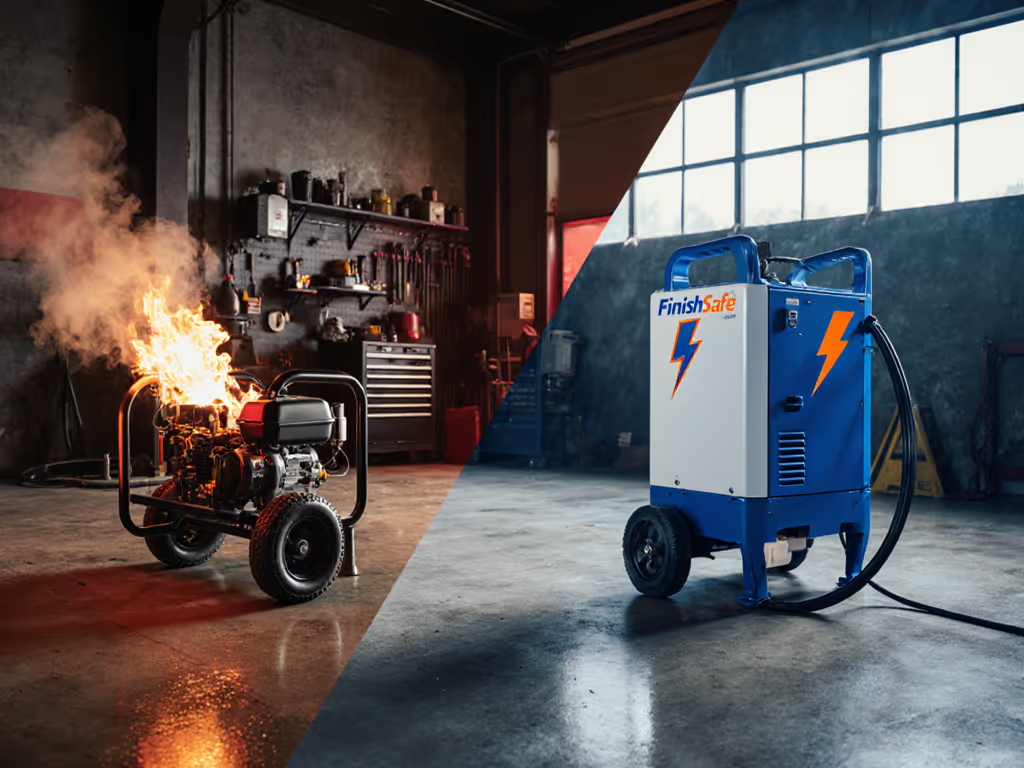
Finish Safety: Why Narrow Tips and High Pressure Betray You
The Narrow-Tip Trap
A common DIY mistake is assuming that a narrow tip (0° or 15° orifice) magnifies cleaning power. It does, but it also concentrates pressure in a tight point, etching wood grain, blowing out mortar joints, and leaving streaks on anodized aluminum. I once consulted on a wagon restoration where the owner had been using a narrow tip on aluminum rail trim. The result: chalky white streaks that wouldn't buff out and rubber trim that darkened from stress. We switched tactics entirely: ditched the narrow tip, foamed a mild chelating wash, extended dwell time to let the chemistry work, and rinsed at a wider angle from farther back. The streaks stopped appearing, rubber trim stayed dark, and the gloss meter reading actually rose after drying. For gentler tools and safer tip choices, browse our finish-safe pressure washer attachments.
The lesson: nozzle fan angle and standoff distance are more critical than PSI for delicate finishes.
Safe Standoff and Angle Recipes
For oily engine bays and workshop floors where finishes aren't at risk:
- Start at 40-inch standoff with a 25° tip at 3000-3500 PSI
- Single-pass stroke; avoid dwelling in one spot
- Rinse at a wider angle to avoid pressure streaks
For painted car bodies, aluminum trim, and stained wood:
- 60+ inches standoff, 40° fan tip, 1500-2000 PSI
- Pre-wash with foam, extended dwell (10-15 minutes)
- Final rinse at ultra-low pressure (under 1200 PSI) or depressurized cascade from a floor-mounted wand
For composite decking and sealed masonry:
- 36-inch standoff, 35° tip, 2000-2500 PSI
- Single-pass motion; test corner first
- Immediate spot-check for grain raise or joint erosion
Detergent Efficiency and Runoff Control
Hot water cuts detergent volume by 30-50% compared to cold systems because heat lowers the surface tension of the soap and accelerates chelation. For a typical 2000-square-foot driveway stained with oil and leaf debris, a cold-water system might require 10-15 gallons of detergent concentrate; a hot-water unit with a 130-150°F water temp can achieve the same result with 5-8 gallons.
But volume savings only matter if you're capturing runoff and preventing environmental load. Workshop owners in areas with storm-drain restrictions or HOA compliance should:
- Use biodegradable, chelating formulas (not silicates or abrasive scrubbers)
- Pre-position catch berms or temporary dams to funnel wash water to a designated infiltration area
- Test runoff pH after detergent application; aim for neutral (pH 6.5-7.5) before discharge
- Avoid bleach-based soaps near landscaping; use oxygen-based brighteners for siding and fence restoration instead
Water Consumption: Gallons Per Job and Budget Constraints
A 4.0 GPM unit running for 60 minutes uses 240 gallons. On a 2000-square-foot driveway with pre-wash, dwell, and final rinse, expect 150-200 gallons total. In drought-restricted regions (California, Arizona, parts of the Southwest), this matters: confirm local rules before buying, and consider a water-recovery system or tanker rental if your home spigot flow is limited. To cut usage further without sacrificing results, use our pressure washer water conservation guide.
For mobile operators charging by the job, underestimating water needs leads to mid-project reruns to fill tanks or paying premium tanker fees. A simple calculation: (square footage ÷ 400) × 50 gallons gives a conservative estimate for pre-wash, main wash, and rinse on residential surfaces.
Specification Comparison: What Numbers Mean for Your Workshop
| Factor | Cold Water | Hot Water 130-160°F | Hot Water 200°F+ |
|---|---|---|---|
| Oil/grease removal | Poor; often requires multiple passes | Excellent; single pass for light-to-moderate buildup | Excellent; fast heavy-duty; risk of damage to soft finishes |
| Detergent volume required | 8-15 gal. for 2000 sq ft | 5-8 gal. for 2000 sq ft | 4-6 gal. for 2000 sq ft |
| Dwell time (pre-foam) | 30-45 min. | 15-25 min. | 5-10 min. |
| Finishing rinse PSI (safe for paint/wood) | 500-800 PSI | 800-1200 PSI | 1200-1500 PSI (riskier) |
| Total time (2000 sq ft, one person) | 3-4 hours | 1.5-2.5 hours | 1-1.5 hours |
| Noise level (typical) | 80-85 dB | 85-90 dB (diesel), 70-75 dB (electric) | 85-92 dB |
| Year-round maintenance | Minimal | Seasonal fuel prep, annual oil change | Same + more frequent burner inspection |
FAQ: Common Workshop Owner Questions
"Will a hot-water unit reduce my water bill?"
Not directly. You may use slightly less detergent, but total water volume is roughly the same as cold-water systems for the same coverage. The payoff is speed: you finish in half the time, saving labor and allowing more jobs per weekend.
"Can I use my garage's 120V outlet?"
Not reliably. Hot-water pressure washers typically draw 15-20 amps (all-electric models), and extension cords lose voltage over distance. A dedicated 240V circuit or 30-amp generator is safer and faster. Running from 120V risks nuisance breaker trips and incomplete heating.
"Do I need a water filter?"
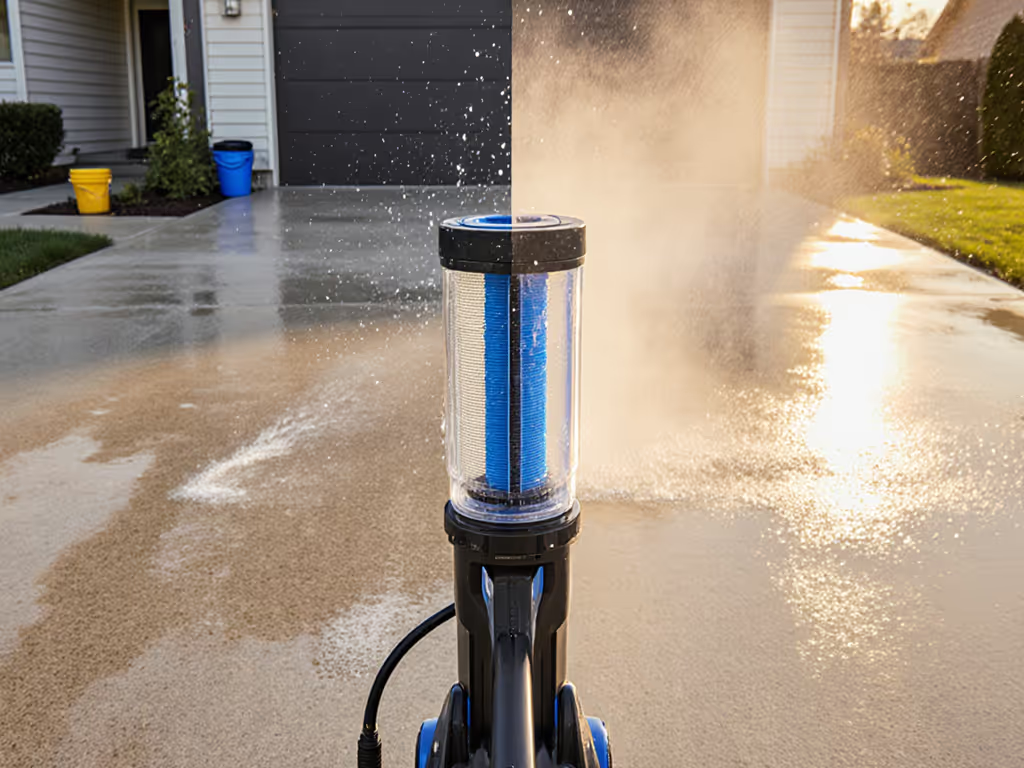
Yes, especially for well water or tanked setups. Sediment and mineral deposits clog the heating element and pump orifices within a season or two. A 50-micron in-line filter costs $30-60 and prevents $500+ pump replacements.
"Which fuel type is quietest?"
All-electric, if you have 240V available (70-75 dB). Among fuel-fired, LP is quieter than diesel at idle, but both hit 85-92 dB under load. If noise is critical, invest in an acoustic enclosure ($200-500) or schedule jobs during neighbors' sleep hours (not 8 AM Saturday).
"Can I run hot water on a deck or siding?"
Yes, but start at 130-150°F, 40° tip, and 60+ inches standoff. Allow foam to dwell 15-20 minutes before rinsing. Test a hidden corner first for wood grain raise or finish blotchiness. If streaking appears post-dry, apply a compatible deck stain or sealant within 24 hours; the stain will adhere better to the cleaned, open grain.
Matching System Type to Your Workshop Profile
Best for electric (if 240V available):
- Townhomes, condo garages, or HOA-restricted neighborhoods with noise rules
- Quarterly to monthly cleaning (low maintenance burden)
- Limited space for fuel storage or engine maintenance
- Budget-conscious; lower lifetime fuel costs
Best for fuel-fired (diesel or LP):
- Detached garages or remote properties; no electrical constraints
- Bi-weekly to weekly jobs (justifies maintenance)
- Mobile operations (detailing, property management crews)
- Need maximum portability and no cord limitations
- Willingness to tune carburetors and change filters seasonally
Next Steps: Building Your Workshop Setup
Before buying, measure your actual needs: What surfaces dominate your to-do list? Engine bays and concrete floors warrant 3500+ PSI and 3.5+ GPM. Painted trim, decking, and siding are best served by 2000-2500 PSI with a foam pre-wash step. Then test a rental unit (often $50-100 per weekend) on a real job to confirm that temperature range and nozzle sizes you've chosen actually work on your materials.
Once you commit to a model, invest in matching accessories: hoses rated to the PSI (not generic contractor hoses), ceramic or stainless-steel tips (not brass; they wear out quickly), and a quality in-line water filter. Chemistry does the heavy lift; pressure just rinses smartly, so pair your hot water choice with a finish-safe foam pre-wash or chelating soap recipe tested on similar surfaces before tackling high-value projects.
Consider visiting local pressure-washing forums where workshop owners document side-by-side tests, post long-term reliability data, and share surface-specific recipes. Real-world results from your climate and soil type often beat manufacturer specs.
Related Articles