
Hard Water Pressure Washing: Scale Prevention & Safe Setup
By Lian Zhou • 12th Apr
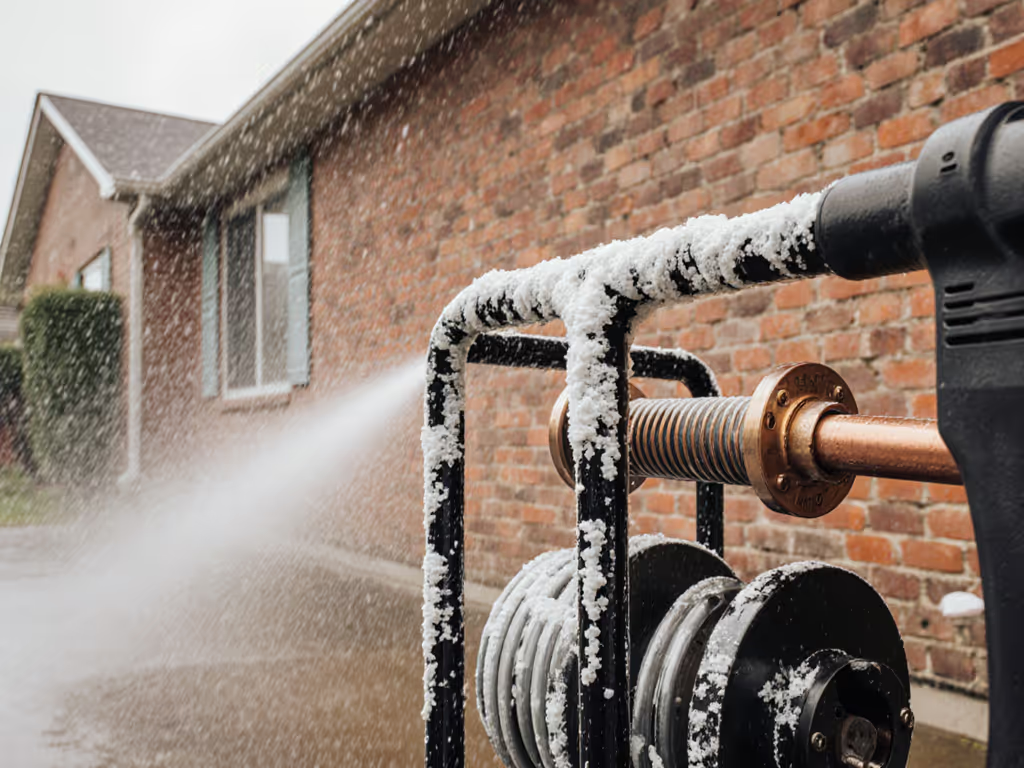
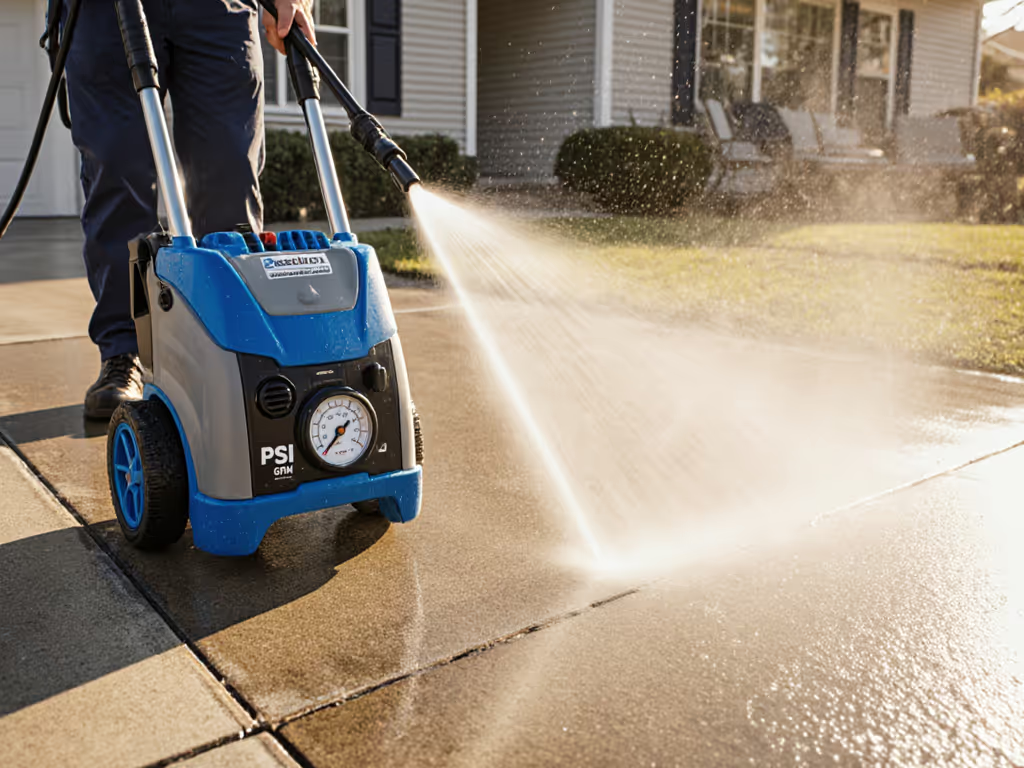
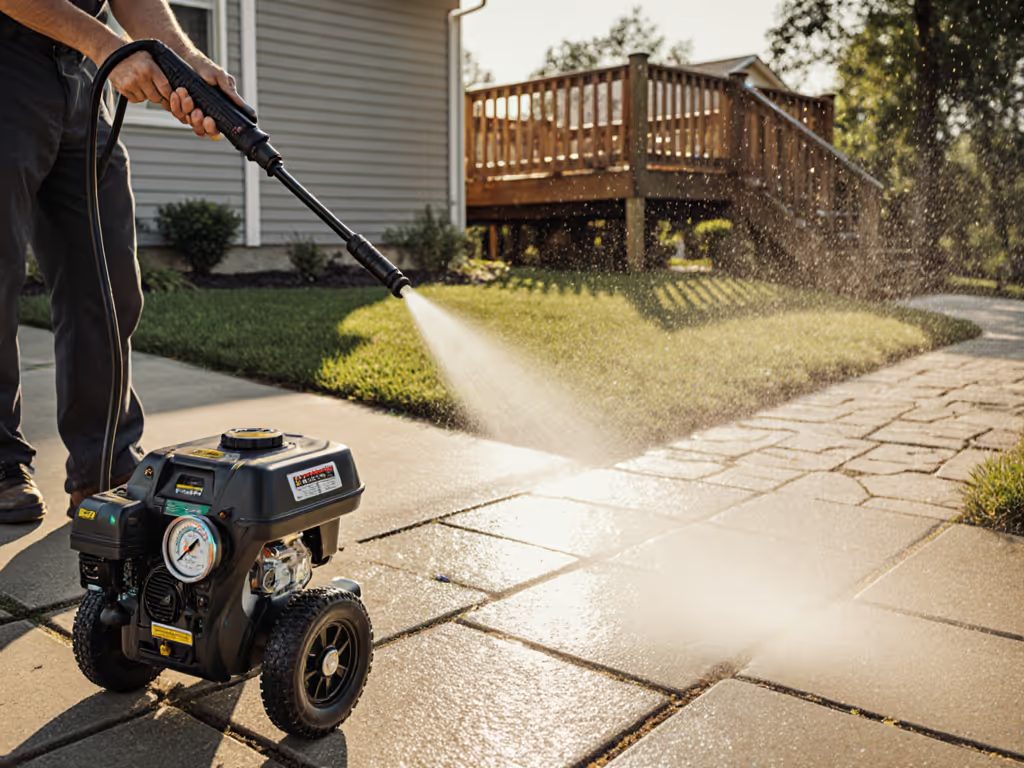
Power washer pressure doesn't stop at the nozzle (it travels through your entire system), and if your water is hard, you're fighting an invisible enemy that damages machines and undermines results. Whether you're a homeowner maintaining a cedar deck or a small operator running jobs across multiple properties, understanding pressure washer scale prevention begins with one fundamental truth: the surface dictates the setup, not the other way around. But so does your water. This guide unpacks how hard water compromises your equipment and finishes, then provides a clear path to safe, repeatable cleaning that protects both your investment and your reputation. For broader setup pitfalls tied to low flow, well water, or rain barrels, start with our pressure washer water supply guide.
What Hard Water Does to Your Pressure Washer
About 85% of the US has hard water, meaning it contains elevated concentrations of calcium and magnesium minerals. These minerals are harmless when you drink them, but when hard water heats up inside your pressure washer, it undergoes a chemical transformation that is problematic.
When heated, hard water forms solid mineral deposits called limescale that accumulate inside the heating coil, nozzles, and internal passages of your machine. Over time, this buildup restricts water flow, forcing the pump to work harder and increasing strain on the motor. The result: reduced cleaning power, inconsistent water temperature in hot-water models, accelerated wear on internal components, and eventual machine failure if left unaddressed. Protect the heart of your system with our pressure washer pump longevity guide, which focuses on chemistry-first fixes that prevent scale-related wear.
Beyond the machine itself, hard water undermines your cleaning chemistry. When detergent molecules encounter calcium ions in hard water, they bond to form insoluble compounds that float on the surface rather than working on your deck or driveway. You end up using more soap to achieve mediocre results, and sometimes those compounds leave corrosive, stubborn residues on the surfaces you've just cleaned.
The Scale Buildup Cascade: Why Dwell Time Matters More Than You Think
A common mistake is assuming that more pressure solves scale problems. It doesn't. Higher pressure speeds up the formation of mineral deposits because hot, pressurized water accelerates precipitation. One test of wood-cleaning best practices illustrates this perfectly: when homeowners reported their cedar steps becoming fuzzy and discolored after pressure washing, the culprit wasn't the wood (it was the combination of excessive pressure at 1800 PSI and insufficient dwell time). Dropping to 1100 PSI, increasing dwell with an oxygen-based cleaner, and following grain direction with a gentler nozzle angle eliminated the problem entirely. The finish stayed even, the fuzz disappeared, and rework evaporated.
This is where scale prevention maintenance becomes inseparable from finish-safe technique. Slow is smooth, smooth is fast.
Measuring Water Hardness: Know Your Baseline
Water hardness is measured in French degrees (F), where each degree represents 10 milligrams of calcium carbonate per liter. Here's where your water likely falls:
- 0-7 F: Very soft water (rare, and actually problematic for detergent performance)
- 8-17 F: Soft water (ideal for pressure washing)
- 15-24 F: Medium hardness (manageable with proper maintenance)
- 25-32 F: Quite hard (requires intervention)
- 33-42 F: Hard water (common; serious scale risk)
- 42 F+: Very hard water (immediate countermeasures needed)
If you don't know your water hardness, call your municipal water treatment facility or use an inexpensive test kit. This single data point drives every downstream decision about equipment, detergent, and maintenance frequency.
Scale Prevention Strategy 1: Cool Properly, Cool Completely
After every cleaning session, allow your pressure washer's heating coil to cool completely before shutdown. When you stop the trigger and water remains hot inside the machine, mineral precipitation accelerates dramatically (each shutdown without a cool-down window increases scale buildup and wear).
The practice is simple: run cold water through the system for 2-3 minutes after your last hot-water application. This flushes out loose mineral particles and prevents stratification of hot, mineral-rich water inside the coil and pump head. Consult your machine's manual for the manufacturer's recommended cool-down procedure; some models have automatic cool-down cycles, while others require manual intervention.
This single step can double the interval between descaling appointments.
Scale Prevention Strategy 2: Water Softening Techniques
The most effective defense against limescale is water softening that addresses the problem at the source. A salt-based water softener removes calcium and magnesium ions before water enters your pressure washer system. This approach also reduces the amount of detergent needed to achieve a finish, saving money over time.
For homeowners, a whole-house softener is the ultimate solution but represents significant upfront cost. For mobile operators or those with limited budgets, portable softening systems and point-of-use cartridges are available. Even a simple inline softener cartridge fitted to your inlet hose can materially reduce scale formation, especially if your water hardness is above 30 F. To further cut mineral load and grit before it reaches the pump, compare pressure washer water filtration systems built for hard-water conditions.
Alternatively, if softening isn't feasible, install an anti-scale device specifically designed for heating coils. These reduce (though do not eliminate) limescale risk on hot-water equipment.
Scale Prevention Strategy 3: Hard Water Detergent Selection
Not all pressure washing detergents are created equal in hard water. When choosing detergents for hard water, prioritize formulas that include chelating agents or water-softening compounds built into the product. These additives bind calcium and magnesium ions, preventing them from interfering with the detergent's cleaning action.
Read the product label for language like "hard water rated" or "chelating formula." For wood, composites, and coated metals (where oxidation risk and finish safety are paramount), choose the mildest effective detergent your surface allows. An oxygen-based cleaner paired with proper dwell time will outperform a harsher product used at excessive pressure every single time.
Actionable Next Steps
Step 1: Test Your Water Hardness
Contact your municipal water department or purchase a test kit ($10-15). Record the result, as this becomes your system baseline.
Step 2: Assess Your Machine's Cooling Protocol
Review your pressure washer manual and establish a cool-down routine. Mark it on your maintenance checklist.
Step 3: Choose Your Scale-Prevention Layer
For high-frequency users or very hard water (35 F+), invest in an inline softener or anti-scale device. For moderate use in medium-hardness areas (20-30 F), consistent cool-downs and proper detergent selection may suffice. For soft-water regions (under 15 F), focus on detergent selection and standard maintenance.
Step 4: Document Your Setup
Write down your water hardness, cooling frequency, detergent brand, and maintenance dates. This record prevents rework and helps you spot trends, such as increasing pressure cycling or reduced flow, that signal buildup.
The pressure washer is only as reliable as the water flowing through it. Treat scale prevention as routine maintenance, not an afterthought, and your equipment will reward you with years of consistent, finish-safe performance.
Related Articles