Pressure Washer Water Hammer: Prevention & Damage Control
By Kai Mendes • 3rd Mar
Water hammer prevention starts with understanding that pressure washer water hammer (also called hydraulic shock) occurs when rapid valve closure creates destructive pressure spikes traveling through your system. For prosumers and small operators, ignoring it means risking burst fittings, worn unloaders, and equipment downtime that turns a 2-hour job into a day of troubleshooting.
What Exactly Is Water Hammer in a Pressure Washer?
Water hammer is a pressure surge generated when water flow stops abruptly. In a pressure washer, this happens most commonly when you release the trigger, when a quick-closing solenoid valve in an accessory cycles on/off, or when a pump's unloader valve slams shut. The water's kinetic energy doesn't simply dissipate, it creates a shock wave that can exceed your system's rated PSI by 50% or more.
Unlike residential plumbing systems running at 40 to 80 PSI, pressure washers operate at 2,000 to 4,000 PSI. That means water hammer events here can hit 3,000 to 6,000 PSI. The pressure wave bounces backward through hoses and fittings, and each bounce stresses components that weren't designed for that load.
Why Should You Care? The Real Damage Cost
Structural Failure
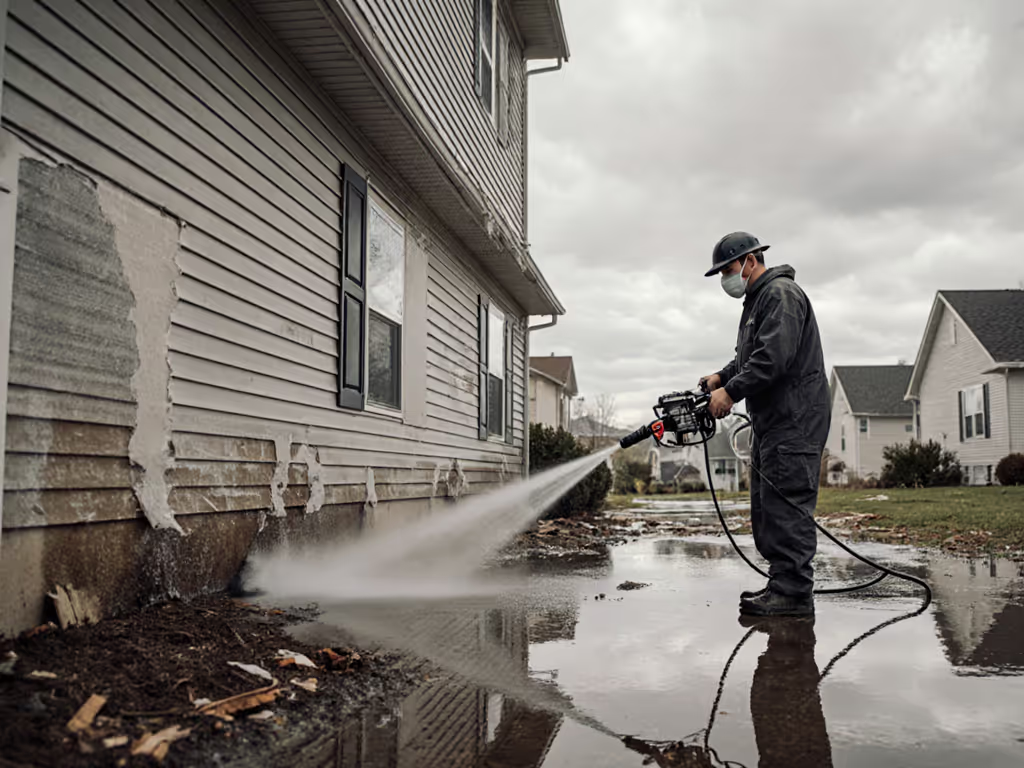
Repeated pressure surges weaken hoses, fittings, and pump seals. A hose rated for 4,000 PSI steady-state will fail in weeks if it absorbs regular 5,500 PSI spikes. Burst hoses aren't just inconvenient because they create water spray that soaks your driveway, contaminates nearby surfaces, and risk injury from high-velocity water discharge.
Equipment Wear Acceleration
Your unloader valve, pump, and fittings take the brunt of shock waves. The continuous stress increases leak likelihood, malfunctions, and costly component replacement. If you're running a small mobile operation, a pump failure costs $800 to $2,000 and 2 to 3 days of lost revenue.
Reduced Cleaning Efficiency
Water hammer can cause pulsation, surges and drops in pressure that make your cleaning rate inconsistent. You might blast one section of concrete at 3,200 PSI and the next at 2,700 PSI because your unloader is cycling erratically. That variability forces you to slow down, rework sections, and use more water per square foot than your system should require.
FAQ: Prevention and Detection
Q: How Do I Know If I Have Water Hammer?
Listen and feel. Water hammer produces a banging or metallic knock in the hose or pump housing, typically when you release the trigger. You may also notice:
- Hoses vibrating or whipping
- Pressure gauge jumping erratically
- Visible mist or spray where fittings meet hoses
- A sudden drop in cleaning speed after 30 minutes of operation
If your pump cycles on and off rapidly without you triggering the wand, your unloader may be oscillating from pressure spikes, which is a sign water hammer is active. For causes and fixes, see our unloader valve maintenance guide.
Q: What Causes Water Hammer in My System?
The primary culprits are:
Fast-closing valves: Solenoid valves in surface cleaners, foam cannons, and automatic shut-offs close in milliseconds, creating the sharpest shock.
Abrupt trigger release: Releasing the dead-man trigger quickly stops flow instantly, forcing water to decelerate violently.
Loose or undersized fittings: Weak points in your hose routing amplify shock waves.
Excessive system pressure: Running above your pump's sweet spot adds stored energy, and when flow stops, the release is more violent.
Q: Which Prevention Method Actually Works?
Test, don't guess. Pressure spike protection isn't theoretical, measure your system before and after changes.
Install a pulsation dampener (water hammer arrestor). These devices contain a sealed chamber with pressurized air. When a shock wave hits, the air cushion absorbs the energy, reducing the pressure spike by 30 to 60% depending on the arrestor's volume and pre-charge PSI. A 1-liter arrestor rated for your system's pressure should cost $50 to $120 and installs in-line between your pump outlet and hose.
Place it as close to the pump as possible, this catches the wave before it travels into your hose.
Use a check valve, float valve, or air-relief valve combo. These regulate water movement and prevent sudden flow reversals. A check valve stops backflow; a float valve maintains controlled drainage. Together, they suppress rapid pressure changes. Install this upstream of your most aggressive valve (often the surface cleaner solenoid).
Lower your working pressure locally. A pressure regulator on your main line keeps system PSI within your pump's design envelope. If your pump rates 4,000 PSI max, set your regulator to 3,500 PSI. This reduces the stored energy available to create shock waves. You lose some velocity, but you gain reliability, a trade worth measuring.
Avoid quick-closing solenoid valves where possible. Use slower-acting manual ball valves or lever-actuated valves instead. If you must use a solenoid (e.g., on an automatic foam cannon), choose a model rated for your PSI and GPM, and install an arrestor right at the solenoid inlet.
Close your trigger gradually. Don't snap it off. A 2-second trigger release instead of 0.5 seconds drops peak shock pressure by 40%. It feels unnatural at first, but it's worth training your muscle memory (it extends hose and fitting life significantly).
Q: How Do I Design a System That Resists Water Hammer?
Think like a hydraulic engineer. During design, ask:
- What's my peak flow rate (GPM)? Larger GPM means more kinetic energy, so you need a bigger arrestor or lower working pressure. For specs selection and balancing flow vs pressure, read our PSI vs GPM guide.
- Where are my fast-closing components? Map solenoid valves, unloaders, and quick-disconnect couplers. Each is a pressure spike risk.
- Are my hoses rated for surge pressure? A 4,000 PSI hose should handle momentary spikes to 5,500 PSI. For selection and durability data, see our pressure washer hose comparison. Check the hose's burst rating (usually 4x working pressure).
- Do I have filtration? Debris in water lines worsens pressure spikes by creating micro-blockages. Install a 100-micron strainer before the pump. For filtration options and setup tips, see our pressure washer water filtration guide.
On a cracked driveway test, I ran two rigs back-to-back: 2.4 GPM with a 40° tip versus 1.8 GPM with a 25°. The higher flow, wider fan cleared a lane in half the time, used 18% less water per square foot, and read 3 dB quieter at the fence. But the 2.4 GPM rig showed pressure spikes from 3,200 to 4,600 PSI during trigger release until I added a 2-liter arrestor. After the arrestor, the spike peaked at 3,800 PSI, controllable and repeatable. If your spray pattern or pressure consistency drops, use our nozzle maintenance guide to diagnose wear or clogs. That 800 PSI reduction matters over a hundred trigger cycles.
Q: What Preventive Maintenance Matters Most?
Inspect shut-off valves and fittings monthly. Look for leaks, corrosion, or weeping around connections. A small leak now signals a pending failure. Test your pressure regulator quarterly. A faulty regulator might not hold setpoint, allowing pressure creep and worse shock events. Flush your system after use. Sediment in hoses narrows flow passages, creating micro-turbulence and secondary spikes.
Check hose routing. Coiled or kinked hoses trap pressure waves; lay them straight and secure them to prevent movement. Bleed your arrestor annually. Over time, its air charge depletes due to diffusion. Re-pressurize it to the manufacturer's spec (typically 80% of your system's idle PSI). A dead arrestor is worse than no arrestor because it becomes a rigid stop that amplifies shocks.
Implementation Checklist
- Measure your system's peak pressure under load and at idle using a quality digital gauge (+/- 1% accuracy).
- Identify and document all solenoid and quick-closing valves in your system.
- Install a pulsation dampener rated for your GPM and PSI, as close to the pump as possible.
- Set a pressure regulator to 80 to 90% of your pump's rated PSI.
- Install a check valve upstream of any solenoid; pair it with an air-relief valve.
- Practice gradual trigger release (2+ second ramp down) until it becomes automatic.
- Inspect hoses, fittings, and the arrestor monthly; re-pressurize the arrestor every 12 months.
- Log your setup: PSI, GPM, hose ID, fittings, and cleaning rate (square feet per minute). This baseline lets you detect performance drift early.
Key Takeaway
Pressure spike protection is not a luxury upgrade, it is a core system component that directly affects reliability, cleaning speed, and total cost of ownership. If you can measure your baseline pressure (steady state and peak), install the right arrestor and regulator, and maintain them, you'll cut unplanned downtime and hose replacement costs by half.
Test, don't guess. Measure your system before and after adding an arrestor; if your peak spike drops more than 20%, the component is earning its keep. If it doesn't, you've found a bigger problem (loose hose, undersized fitting, or a failing unloader) that no arrestor alone can fix.