Pressure Washers With Water Filtration: Performance Compared
By Maya Okafor • 11th Mar
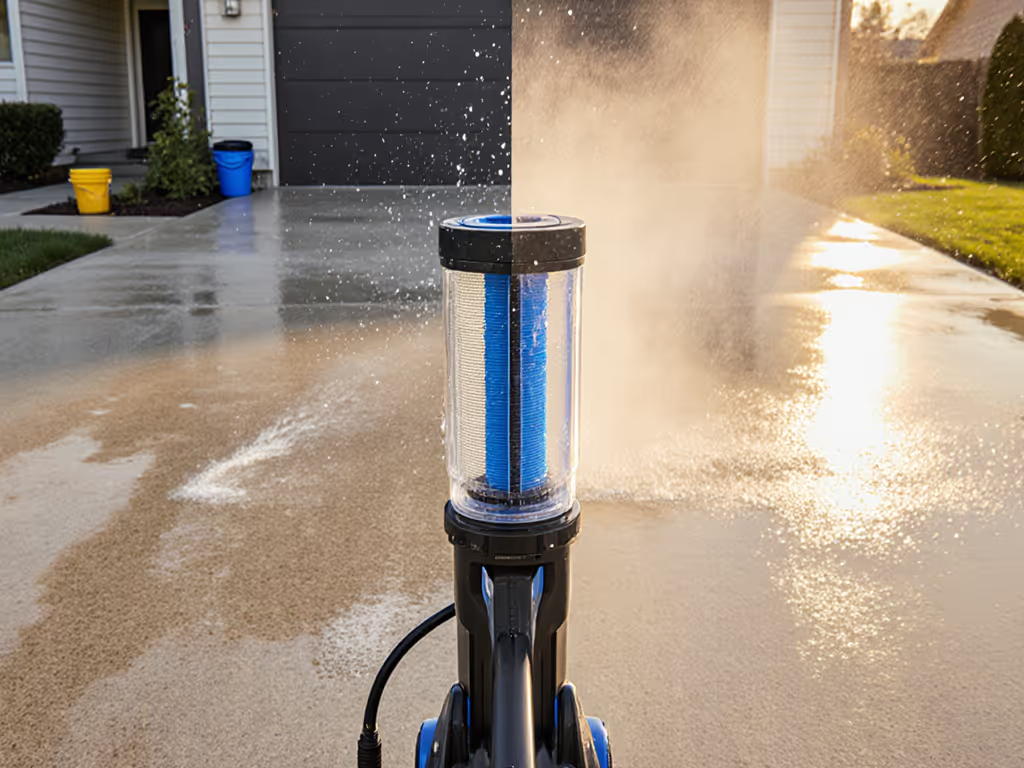
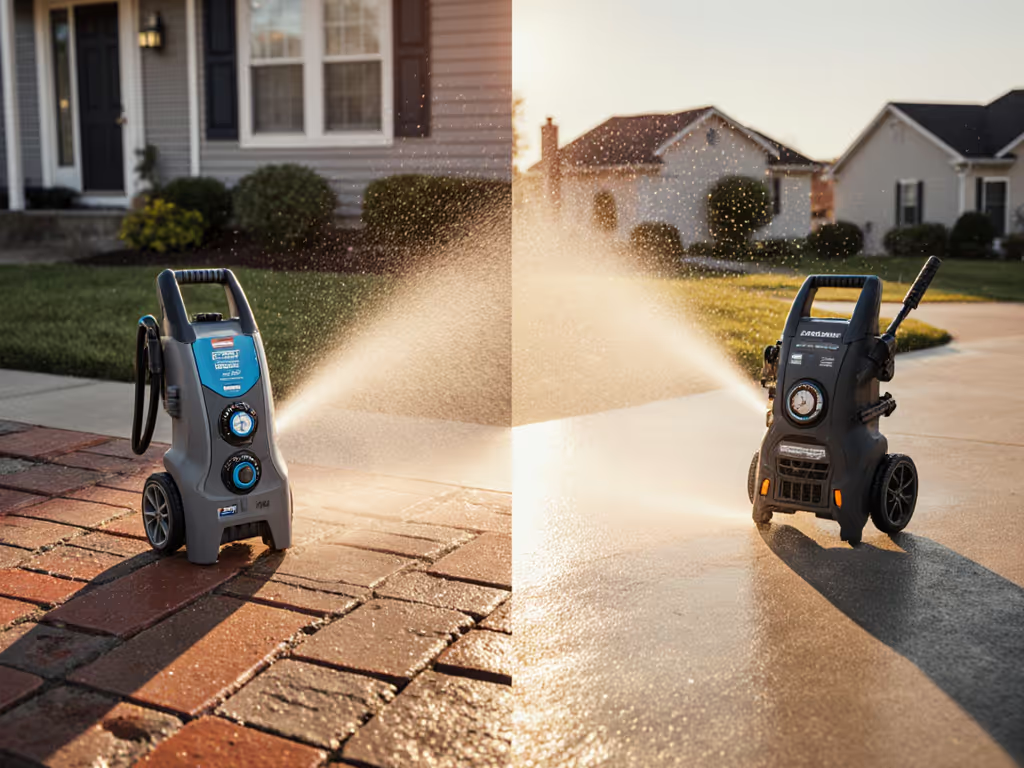
Pressure washers with water filtration systems represent a fundamental shift in how professionals and homeowners protect equipment and surfaces alike. An integrated water filtration system isn't simply an add-on. It's a chemistry-forward decision that removes sediment, minerals, and contaminants before they ever reach your pump or spray tips. This distinction matters enormously when you're washing delicate finishes, coated metals, and anything vulnerable to mineral streaking or oxidation.
The question isn't whether you need water filtration; it's which configuration and filtration strategy best match your water source, pump capacity, and the surfaces you're protecting. Let's examine the evidence and architectures side by side.
What Exactly Is Water Filtration in Pressure Washing?
Why does inlet water quality matter so much?
Your pump and nozzles are precision instruments. A single grain of sediment or mineral crystal can etch finishes, clog spray tips, and accelerate internal wear. Most municipal water supplies and wells carry suspended particles, chlorine residue, and dissolved minerals that seem invisible to the eye but accumulate rapidly inside closed systems.[1] A pressure washer should never be operated with an unfiltered inlet water source, according to industry guidance, because components can be severely damaged by even microscopic particles flowing in with supply water.[2]
This is particularly critical when using foam pre-wash systems or low-PSI rinses on painted surfaces. Unfiltered water introduces mineral deposits that appear as chalky streaks or blotchy oxidation patterns after drying, results that undo all your chemistry work. Chemistry does the heavy lift; pressure just rinses smartly, but only if the water itself is clean.
How do inline strainers differ from cartridge filters?
These two approaches occupy different roles in your filtration hierarchy. Inline strainers use a mesh or screen to trap large particles and sit directly in the water line before the pump intake. They're inexpensive, easy to inspect, and take seconds to clean by backflushing.[1] The trade-off is specificity: they capture visible debris but allow fine sediments and dissolved minerals to pass through. They're ideal for well water or tank-fed systems where you're primarily removing leaves, sand, or rust flakes.
Pressure washer filters, by contrast, mount downstream and provide comprehensive filtration using ceramic, paper, or fabric media. These capture both large and fine particles (sediments, minerals, and other impurities), ensuring clean water reaches your nozzle.[1] The result is higher water purity and fewer post-wash defects, though they require longer maintenance intervals and cost more upfront.
Inline Strainers vs. Cartridge Filters: Performance Metrics
What mesh size should you choose, and how does it affect flow?
Mesh fineness is expressed numerically: higher numbers mean smaller openings. An 80-mesh screen is considered standard for inlet filtering; it blocks particles larger than approximately 177 microns.[2] However, for high-volume pumps, a coarser 40-60 mesh is advisable to reduce resistance and maintain adequate flow.[2] The relationship is inverse: finer mesh captures more contaminants but increases water resistance, reducing gallons per minute delivered to your pump.
The engineering principle is unforgiving: if your filter restricts flow below your pump's rated GPM, the pump works harder, temperatures climb, and maintenance costs spike.[2] Industry guidance recommends sizing your filter to handle flow rated twice your pump requirement: a 5 GPM pump needs a 10 GPM filter capacity.[2] This sizing prevents the pump from laboring and maintains consistent pressure during operation.
Sediment Filter Efficiency: What's Actually Removed?
Can inline strainers alone protect against mineral buildup?
No. Inline strainers excel at blocking particulate matter (visible sediment, sand, rust) but they're largely transparent to dissolved minerals like calcium, magnesium, and iron. Water purity is where cartridge filters earn their place. Dissolved minerals pass right through mesh filtration and concentrate in your pressure lines and on cleaned surfaces, creating the residue issues that plague finishes.
If you're washing in a hard-water region or rely on a mineral-rich well, a basic strainer is insufficient. You need media filtration (ceramic or activated carbon) to address mineral content and chlorine, which can affect foam chemistry and leave oxidation streaks on aluminum, coated metals, and painted wood.
I once consulted on a wagon-restoration job where the owner complained about persistent chalky deposits under aluminum trim rails, particularly after rinsing. The previous contractor had relied solely on a 100-mesh strainer, which actually worsened the problem by forcing finer particles into the lines. We switched to a dual-stage approach: a 50-mesh pre-filter for bulk sediment and a ceramic cartridge downstream for minerals. We extended dwell times on our mild chelating foam pre-wash, rinsed at wider nozzle angles from greater standoff distance, and eliminated the narrow, high-PSI tip. The streaks stopped, the trim stayed dark, and the paint's gloss meter reading actually improved after drying. That result crystallized a principle I rely on: chemistry first, pressure last, and water quality is the foundation that allows chemistry to work.
System Architecture: Integrated vs. Standalone Filtration
Should filtration be built into the pressure washer or added inline?
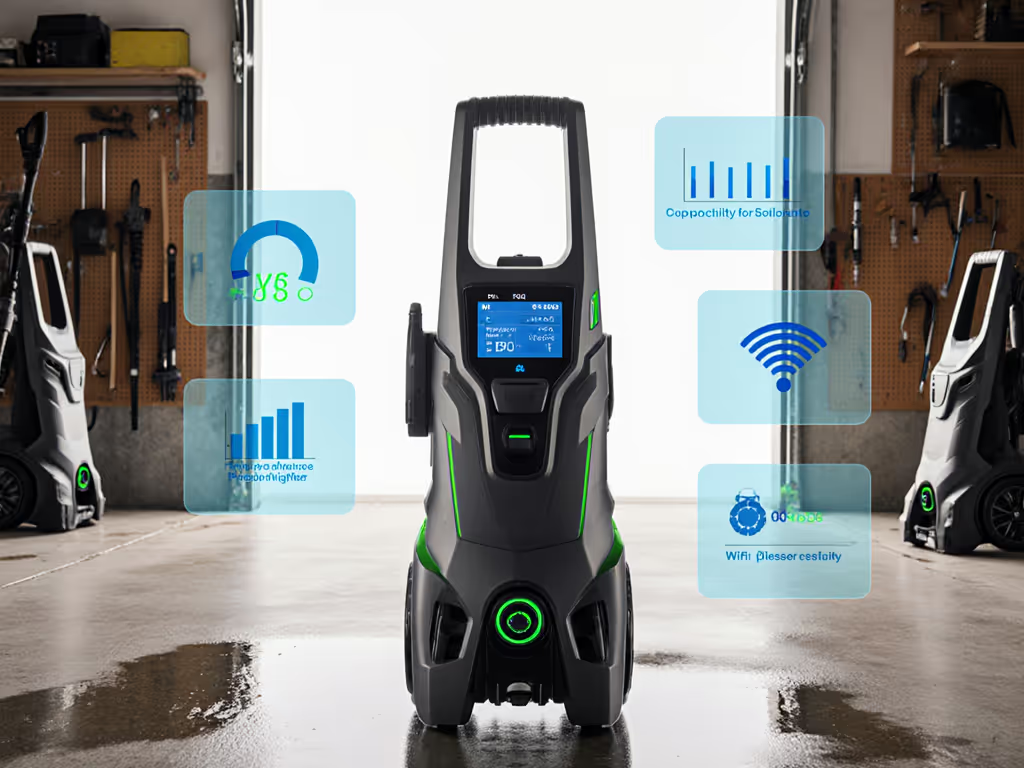
Many commercial and professional-grade units now feature integrated cartridge filters as standard. The advantage is simplicity and optimized design: the filter diameter, media, and housing are sized to the pump's flow and the machine's duty cycle. Servicing happens during regular maintenance windows, and there's no debate about compatibility.
Standalone filters offer flexibility, especially if you're running multiple machines or rotating between equipment. You can upgrade or swap filter media without replacing the entire unit. However, compatibility becomes critical: you must match the filter's PSI rating (typically 125-150 PSI for inlet filters) to your supply pressure, and ensure port sizes and flow ratings align with your pump and hose diameter.[2]
What's the practical maintenance difference?
Inline strainers require more frequent attention, weekly or bi-weekly cleaning if you're running heavy volume, because they clog faster and reduce flow. Cartridge filters extend maintenance intervals significantly: many go 40-80 hours before needing a rinse or replacement, depending on water source and media type.[1] For weekend homeowners, that might mean one seasonal service; for mobile operators running 30+ hours per week, the difference between 6 cleanings per month versus 1 is material downtime and labor.
Water Source Considerations and Filtration Matching
Does your water source dictate the filter type?
Absolutely. Municipal water typically has low sediment but chlorine residue and moderate hardness. A single cartridge filter with activated carbon often suffices. Well water demands more vigilance: it may carry high sediment, iron bacteria, sulfur, and extreme hardness. A two-stage approach: 50-mesh strainer followed by a ceramic cartridge, is more reliable.
Tank-fed or rainwater systems present a different risk profile. If you're setting up from wells, tanks, or rain barrels, troubleshoot performance with our water supply issues guide. If you're pulling from a tank, your PSI rating requirement changes: head pressure or suction in the feed line is typically minimal, so PSI rating becomes less critical than flow restriction.[2] The focus shifts to sediment removal and preventing pump cavitation from an undersized intake line.
How does mineral buildup prevention strategy shift based on water quality?
Mineral buildup prevention is chemically and mechanically coupled. If your inlet water carries high calcium or iron, the mechanical filter captures only suspended particles. Dissolved minerals still coat your nozzles and finishes. The solution is two-pronged: (1) use a filter with activated carbon or ion exchange media to reduce mineral concentration, and (2) pair that with a chelating foam pre-wash that binds residual minerals so they rinse cleanly instead of drying as streaks.
This is where finish protection meets water chemistry. Many operators skip the pre-wash to save time, then spend twice as long correcting oxidation and mineral blotching afterward. The integration of clean inlet water, mild pre-wash, and controlled rinse pressure is where results stabilize.
Performance Metrics: GPM, PSI, and Practical Trade-Offs
What happens if your filter creates too much backpressure?
Restricted flow causes pressure to spike even as actual cleaning power diminishes, a paradox that catches many users off guard. Your pump delivers X gallons per minute; if your filter can only pass 60% of that due to clogging or undersizing, pressure climbs but the nozzle receives less water, actually reducing flow rate and effectiveness. The unloader valve cycles more aggressively to bleed off excess pressure, raising internal heat and wear.
For house pressure washing, a 2.5-3.0 GPM pump at 2500 PSI is typical. For a deeper dive into how these specs interact, see our PSI vs GPM guide. You want a filter rated for at least 5-6 GPM to avoid restriction.[2] That headroom ensures your pump operates in its efficient band, temperatures stay reasonable, and you maintain consistent rinse performance across full trigger-pull runtime.
How do you verify flow isn't being bottlenecked?
The practical check: run the machine with the filter bypass open (if available) and measure gallons per minute using a bucket and timer. Compare that to performance with the filter in-line. More than a 15-20% drop suggests clogging or undersizing. At that point, backflushing or replacing the filter becomes urgent. Continuing operation degrades pump lifespan and reduces cleaning speed.
Integrated Filtration Systems: Real-World Comparison
Are integrated systems worth the premium?
Integrated filters bundled with commercial or prosumer-grade machines typically cost $300-800 more than the base unit. That premium buys you engineering certainty: the filter is sized, positioned, and maintained as part of the machine's design life. Downtime for filter service is predictable and factored into the manual.
For small property-care operators and DIY users running under 200 hours per year, standalone filtration offers better value. You pay less upfront ($150-300 for a quality cartridge filter) and can replace media or swap configurations as your work evolves. The trade-off is responsibility: you must monitor filter condition and manage compatibility yourself.
What maintenance surprises do owners encounter?
The most common: installing a filter and then ignoring it. A clogged filter creates the illusion of pump failure, pressure drops, flow weakens, engine sounds labored. Owners assume internal wear or pump cavitation and attempt repairs unnecessarily. A simple filter backflush or cartridge replacement restores performance instantly. Building filter inspection into your pre-use checklist costs 30 seconds and prevents hours of troubleshooting.
Second surprise: high-pressure bypass water forced through undersized filter ports. If your machine routes the unloader bypass directly back to the inlet filter, bypass pressure can spike and damage the filter housing or blow the intake gasket.[2] A simple fix: route bypass flow to the tank or pump inlet on the opposite side of the machine, or increase the bypass line diameter to reduce PSI in that line.[2]
Choosing the Right Filtration Path for Your Surface and Water
How do you match filtration strategy to your cleaning surfaces?
Begin with your water source and the finishes you're most protecting. If you're cleaning painted metal, coated wood, or finishes vulnerable to oxidation, house pressure washing demands mineral-free water. That means cartridge filtration at minimum, ideally with some hardness reduction.
If you're primarily working concrete, driveway, and deck surfaces, a 50-80 mesh inline strainer suffices if your water is clean-source (municipal supply, not well). The trade-off is acceptable because the surfaces are forgiving and post-wash blotching is less consequential.
For mobile operators rotating between residential and commercial jobs, an integrated filter on the machine is best. Consistency across sites, no compatibility guessing, and warranty simplicity justify the premium. For facility managers, landlords, or small crews with permanent setups, standalone filters on tanks or permanent feed lines offer flexibility and cost savings.
What's the role of filtration in your pre-wash chemistry?
A chelating or surfactant-based foam pre-wash only works optimally on clean water. Mineral salts in unfiltered water react with the chelant and neutralize it, leaving behind residue that no amount of rinsing removes. You end up chasing oxidation and blotchiness because your chemistry was sabotaged upstream. This is why specifying filtration (specifically sediment filter efficiency tuned to your water hardness) is non-negotiable for finish-safe work.
Chemistry does the heavy lift; pressure just rinses smartly, and clean water is the prerequisite for both.
Key Takeaways and Next Steps
Water filtration in pressure washing is not optional for finish-sensitive work. Integrated water filtration systems on modern equipment, or well-matched standalone filters on older machines, are investments in result consistency and equipment longevity.
Inline strainers handle visible sediment but miss dissolved minerals and chlorine, addressing only 40-50% of the contamination problem. Cartridge filters with ceramic or carbon media capture both particulate and some dissolved impurities, enabling water purity that surfaces (especially painted, coated, and anodized materials) notice immediately.
Size your filter to handle 2x your pump's GPM. Match mesh fineness to your water source: 50-80 mesh for well water, 80 mesh for municipal supplies. Plan maintenance intervals and factor filter cost into your annual operating budget. And recognize that clean inlet water is the foundation upon which chemistry-first, pressure-last protocols build success.
Consider your specific surfaces and water quality next. If you're working regularly in mineral-rich areas or on finishes that show oxidation easily, trial-run a cartridge filter setup on one site and measure results. Track drying time, spot-free finishes, and post-wash blotchiness. The data will likely surprise you, and guide your next purchase decision.
Explore your local water source: contact your municipal authority or have well water tested. Identify hardness level and sediment content, then right-size filtration accordingly. Connect with operators in your region who've solved the same water challenges, forums like r/pressurewashing and GarageJournal host detailed troubleshooting threads. Finally, document your setup once you've optimized it. Note filter type, media, replacement intervals, and observed surface quality. That record becomes your repeatability asset and your guide for scaling to new equipment or teaching others in your crew.
Related Articles