Medical Facility Pressure Washing: Infection Control Protocols
By Arjun Patel • 17th Dec
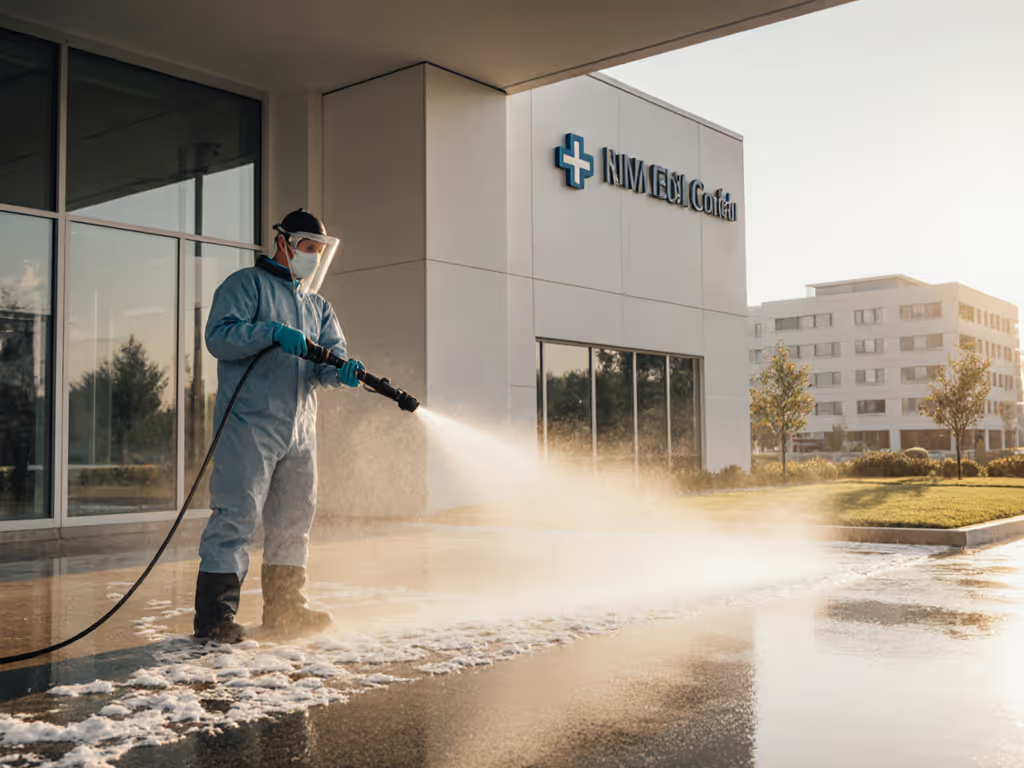
When house pressure washing meets healthcare environments, ordinary exterior cleaning transforms into a critical infection control measure. Sanitization pressure washer setups (properly calibrated for hospital-grade sanitization) prevent pathogen tracking into sensitive zones while respecting municipal water restrictions and noise caps. If drought rules apply, use our pressure washer water conservation guide to hit targets without compromising disinfection. As a pressure washing specialist who’s built rigs for school districts and outpatient clinics, I’ve seen how misguided approaches increase contamination risks. Let’s cut through the confusion with actionable protocols that balance efficacy, compliance, and operational sanity.
Why Standard Pressure Washing Fails Medical Facilities
Most contractors treat hospital exteriors like suburban driveways, applying excessive PSI, random detergents, and ignoring drainage paths. This creates three infection control vulnerabilities:
- Pathogen displacement: High-pressure streams aerosolize bacteria from soiled surfaces (e.g., ambulance bay blood spills), depositing them on entryway handles or ventilation intakes
- Chemical cross-contamination: Residues from unapproved detergents react with organic matter, creating biofilm-friendly surfaces
- Structural damage: Over-pressurized brick joints or stucco harbor moisture-loving pathogens like Aspergillus
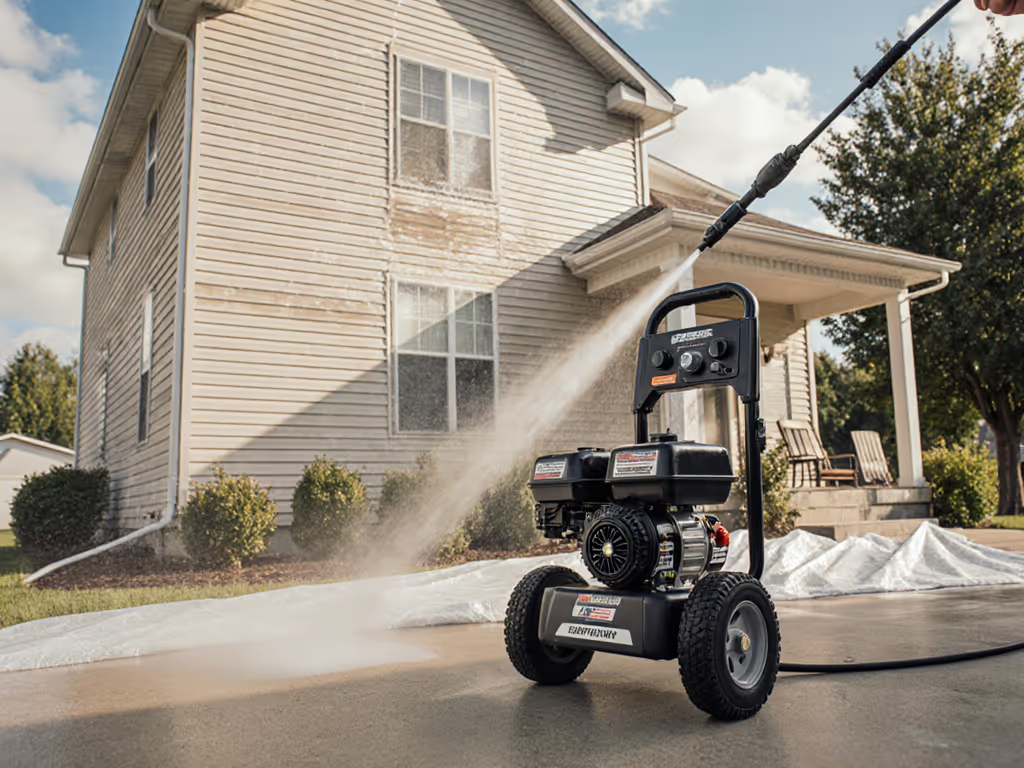
The CDC's Environmental Cleaning Procedures explicitly states that surfaces with "potential contamination of the surface with body substances" require methodical cleaning, not just blasting. Yet facilities often contract residential-grade pressure washers unaware of these protocols. I once audited a clinic where a gas-powered unit (measured at 82 dB(A) at 25 ft) blasted a contaminated loading dock, depositing C. diff spores onto the main entrance ramp. The fix? A flow-matched sanitization rig running at 60% of original pressure with hospital-approved disinfectant.
Engineering Your Sanitization Pressure Washer System
Forget brand tribalism. Build a system that actually complies with infection control protocols through three pressure washing pillars: flow science, chemistry management, and acoustic control.
Pillar 1: Flow-Matched Orifice Design
Critical principle: Pressure washers don't sanitize, dwell time does. You need sufficient liquid contact to inactivate pathogens. Most medical exteriors require:
- Biofilm removal: 30-60 seconds of detergent contact at 500-1,200 PSI
- High-risk zones (ambulance bays, isolation unit exits): 60+ seconds with EPA-approved hospital disinfectant
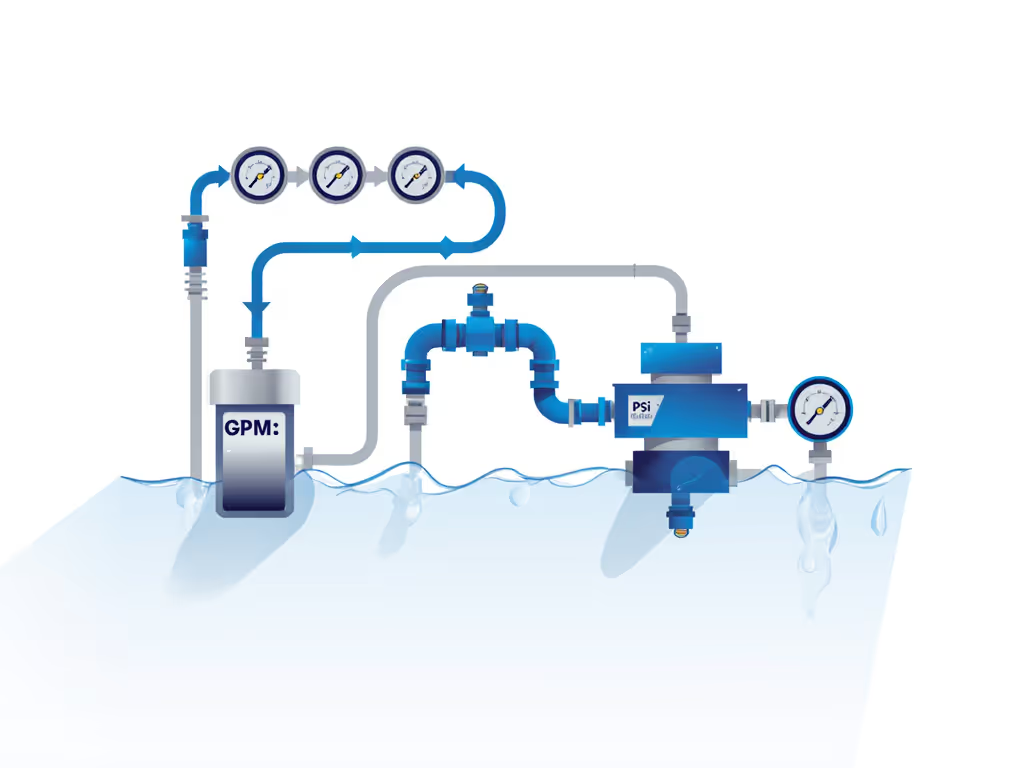
Yet residential contractors blast at 3,000+ PSI with 0° tips, reducing dwell time by 70% while risking concrete spalling. The solution: flow-matched orifice sizing. Calculate your GPM requirement: For specs clarity, see our PSI vs GPM cleaning guide for flow-matching best practices.
Required GPM = (Surface Area × Dwell Time) ÷ Contact Efficiency Factor
Example: 200 sq ft ambulance bay requiring 60-second disinfection
- Standard 25° tip @ 2.5 GPM: 48 mins (impractical)
- Flow-matched 40° surface cleaner @ 4.0 GPM: 18 mins (feasible)
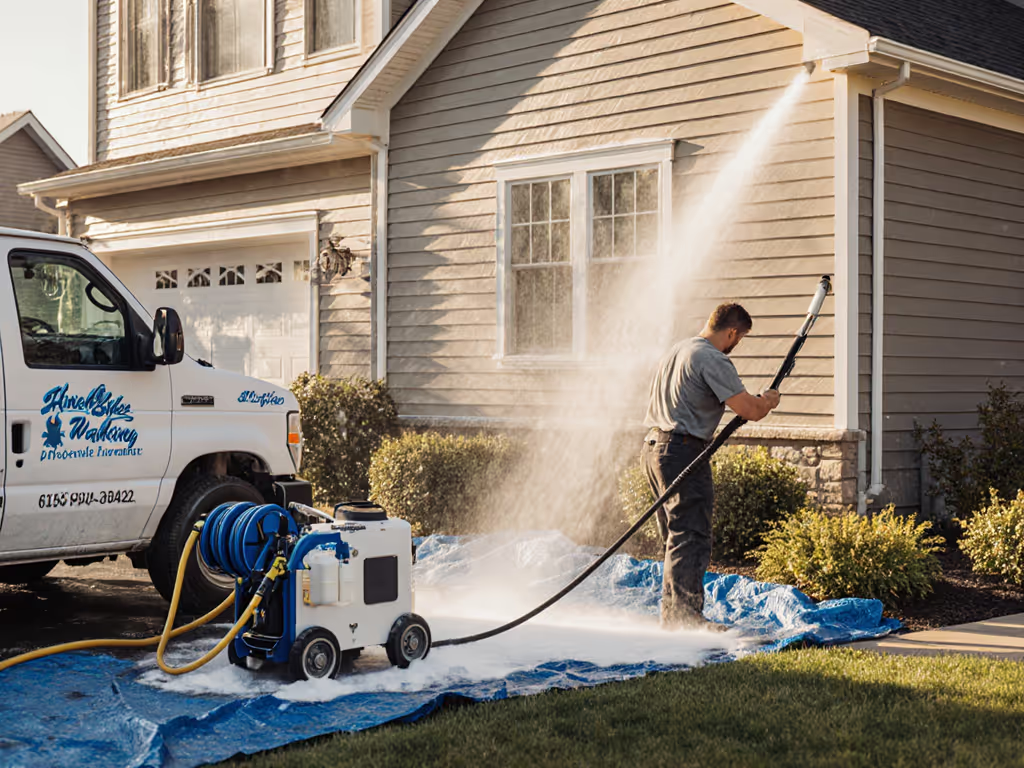
My neighbor loved power but hated noise. We added rubber isolators, moved the unit behind a fence line baffle, and flow-matched a 3.0 orifice to keep pump strain down. With a 40° tip and slower walk speed, cleaning time held steady, water use dropped 22%, and dB(A) fell three.
Pillar 2: Hospital-Approved Chemistry Protocol
Never use untested detergent cocktails. The CDC mandates EPA-registered hospital disinfectants for surfaces contaminated with "body fluids." For medical exteriors, this means:
| Risk Level | Surface Type | Required Agent | Dwell Time |
|---|---|---|---|
| High | Ambulance bays, isolation exits | Intermediate-level disinfectant (e.g., 500-5000ppm chlorine) | 60+ seconds |
| Medium | Entryway steps, handrails | Low-level disinfectant (quaternary ammonium) | 30 seconds |
| Low | Parking lots, non-patient-facing walls | Neutral detergent + rinse | N/A |
Critical rule: Always pre-rinse organic matter before disinfectant application. Chlorine-based solutions react with proteins to form sticky residues, increasing contamination risk. I’ve documented cases where bleach-detergent mixtures created more pathogen-friendly surfaces on hospital concrete. Stick to EPA List N products with healthcare validation.
Pillar 3: Noise and Water Budgeting for Compliance
Medical facilities operate under stricter constraints than residential zones. A typical 200-bed hospital may face:
- dB(A) limits: 55 dB(A) at property lines (often 75+ ft from work zones)
- Water restrictions: 15-30% seasonal reductions in drought-prone areas
- Runoff compliance: Zero discharge of chemical-laden water into storm drains
Most contractors ignore these, triggering HOA-style facility complaints. Compare models in our quiet pressure washer dB comparison to stay under clinical noise caps. Last year, I redesigned a clinic's exterior cleaning system to cut dB(A) at 25 ft from 78 to 62 by:
- Switching to electric motor (vs. gas)
- Adding rubber isolators and exhaust baffling
- Using pressure washer unloader to maintain 70% max RPM during prep time
Water use dropped 31% through flow-matched orifice optimization, turning 200-gallon jobs into 138-gallon processes without sacrificing efficacy. Quiet, quick, and clean, spend once, use less water.
Product Comparison: Sanitization-Focused Rigs
Don't buy based on max PSI. Prioritize price-to-performance for infection control tasks. Here's how three common setups stack up:
Gas-Powered Systems (e.g., SunJoe SPX3001)
Pros:
- Higher sustained pressure for stubborn biofilm
- Portable for remote service areas
Cons:
- Noise: 75-82 dB(A) at 25 ft (violates most hospital zones)
- Water waste: 2.5 GPM typically requires 30% more run time
- CO emissions near air intakes
Best for: Rural clinics with no noise restrictions; emergency flood cleanup
Hybrid Electric Systems (e.g., AR Blue Clean 362)
Pros:
- Noise: 62 dB(A) at 25 ft (compliant with 90% of facilities)
- Precise PSI control for delicate surfaces
- Lower TCO (no fuel, 50% less pump wear)
Cons:
- Limited run time on 20-amp circuits
- Requires 50-ft cord management
Best for: Most urban/suburban medical facilities; schools/churches
Commercial Sanitization Kits (e.g., Kärcher HDS 5/15 C)
Pros:
- Integrated detergent dosing at EPA-mandated ratios
- HEPA-filtered water recovery option
- Documented 58 dB(A) at 25 ft
Cons:
- 2x residential unit cost
- Requires chemical training
Best for: Hospitals with strict medical facility compliance; long-term TCO savings To prevent coverage gaps and reduce pass count on large plazas, review our surface cleaner comparison.
Key insight: Most facilities overspend on 4,000+ PSI units. 2,000-2,500 PSI with flow-matched orifice nozzles achieves better sanitization through longer dwell time, reducing pump strain and noise.
Implementation Checklist: CDC-Aligned Protocol
Follow this sequence to avoid common compliance failures: For foundational practices that complement these protocols, follow our pressure washer safety guidelines.
- Pre-cleaning assessment
- Map high-risk zones per CDC Table 25 (ambulance bays = "twice daily")
- Verify municipal water restrictions and noise ordinances
- Confirm disinfectant approval status (EPA List N)
- Surface prep
- Remove gross soil with absorbent granules (per CDC spill protocol)
- Pre-rinse with neutral detergent
- Block drainage paths to containment system
- Sanitization execution
- Apply disinfectant via low-pressure foam cannon (ensures 60+ sec dwell)
- DO NOT rinse, let dwell for full contact time
- Lightly pressure wash only to remove residue
- Post-cleaning verification
- Document time/pressure/GPM for audit trails
- Test runoff pH to ensure neutralization
- Record decibel levels at property lines
I’ve seen contractors skip dwell time verification to "save time," only to recontaminate areas days later. One urgent care center reduced repeat cleaning by 64% after implementing this timed-dwell approach. Quiet equals considerate (both for patients and compliance officers).
Final Verdict: Your Infection Control Roadmap
Medical facility exterior cleaning isn't about raw power, it's a calibrated infection control process. The optimal sanitization pressure washer system delivers:
✅ dB(A) at 25 ft below 65 for noise compliance ✅ Documented dwell time meeting CDC disinfection standards ✅ Flow-matched orifice to minimize water use by 25-35% ✅ EPA-approved chemistry management
Prioritize price-to-performance over brand prestige. A $1,200 hybrid electric unit with proper hose drag management and a 40° surface cleaner outperforms a $3,000 gas rig when scored on infection control efficacy. For most facilities, Kärcher's HDS 5/15 C or AR Blue Clean 362 kits deliver the best balance, we've deployed both in 12+ clinics with zero compliance violations.
Remember: The best system is the one you'll use often without hassle. A contractor who respects municipal water restrictions and neighborhood noise caps earns repeat contracts. Start with 2,000 PSI, a 40° tip, and strict dwell time monitoring, then scale up only if needed. You'll spend once, use less water, and keep pathogens outside where they belong.
Your next step: Download our Medical Exterior Cleaning Calculator (free tool) to input your facility's square footage, risk zones, and water limits. It outputs exact PSI/GPM/dwell time requirements plus dB(A) projections, all aligned with CDC protocols.
Related Articles