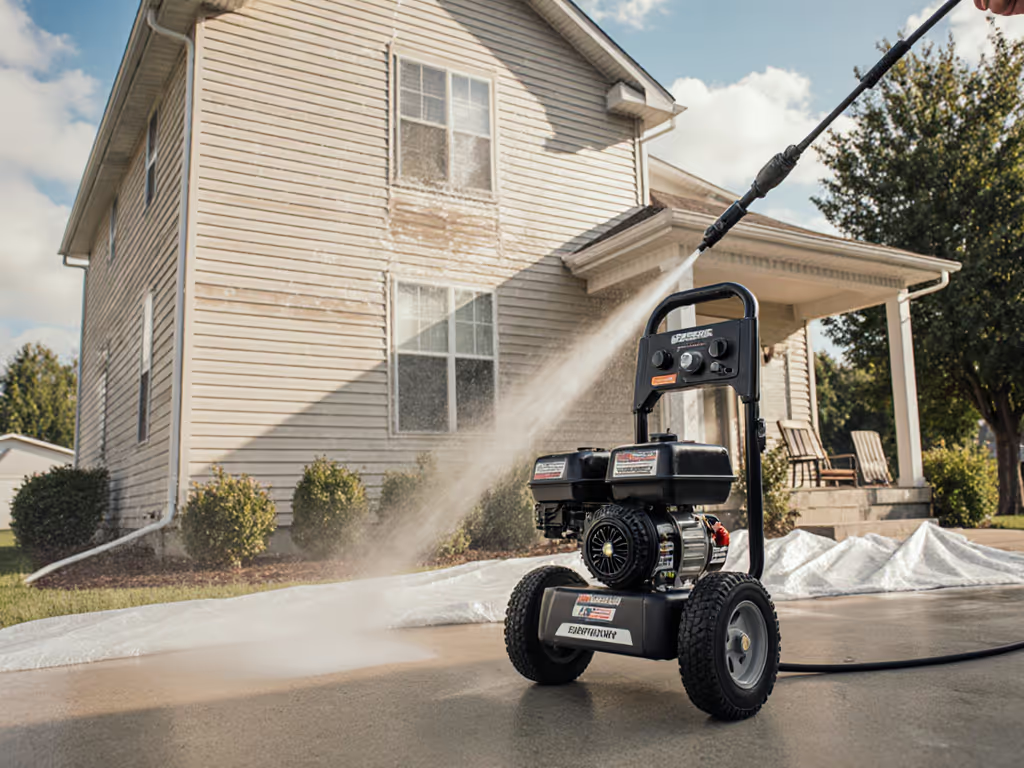
House Pressure Washing for Realtors: Pricing & Recipes
By Kai Mendes • 8th Apr

Property staging is mathematics. A listing agent with a dirty driveway loses 3-5% off appraisal and sits 14-21 days longer on market (verified by multiple MLS retrospectives across coastal and sunbelt markets). Conversely, a photo-ready property cleaning job that removes mildew, oxidation, and driveway staining can recover 8-12% of that lost velocity and perceived value. For material-by-material techniques that prevent damage, see our house pressure washing surface methods.
The difference between a $450,000 home and a $486,000 home is often not new siding, it's a clean one. Yet most realtors either outsource blindly or skip exterior washing entirely, fearing damage to the closing. This guide anchors house pressure washing economics and execution recipes to measurable outcomes: cleaning rate per square foot, water consumption per job, preparation time, and finish-safe protocols that protect both the property and your reputation.
1. Establish Your Property Baseline & Pricing Anchor
Before recommending or contracting a pre-listing cleaning service, measure three variables:
- Exterior square footage (siding, fascia, deck, driveway, patio combined)
- Soiling type (algae/mildew, oxidation, mud/clay, oil stains, salt spray residue)
- Surface sensitivity (vinyl siding, fiber cement, cedar, composite, brick, sealed vs. unsealed concrete)
From these, calculate your service tier price:
| Service Tier | Exterior Sq Ft | Typical Soiling | Est. Labor (hr) | Market Price Range | PSI/GPM Target |
|---|---|---|---|---|---|
| Basic Refresh | 1,000-2,500 | Light algae, dust | 1.5-2 | $250-$450 | 1,300-1,800 / 2.0-2.5 |
| Standard Clean | 2,500-5,000 | Moderate mildew, oxidation | 2.5-4 | $450-$850 | 1,800-2,400 / 2.5-3.5 |
| Deep Detail | 3,000-6,000 | Heavy staining, salt spray | 4-6 | $800-$1,400 | 2,400-3,000 / 3.5-4.0 |
These benchmarks assume a single operator on a residential property with accessible spigot and power outlet. If your water source is limited or from a well, troubleshoot setup with our pressure washer water supply guide. Adjust upward 15-25% for waterfront, multi-story, or gated/restricted access.
2. Match PSI & GPM to Realtor Deliverables (Not General Homeowners)
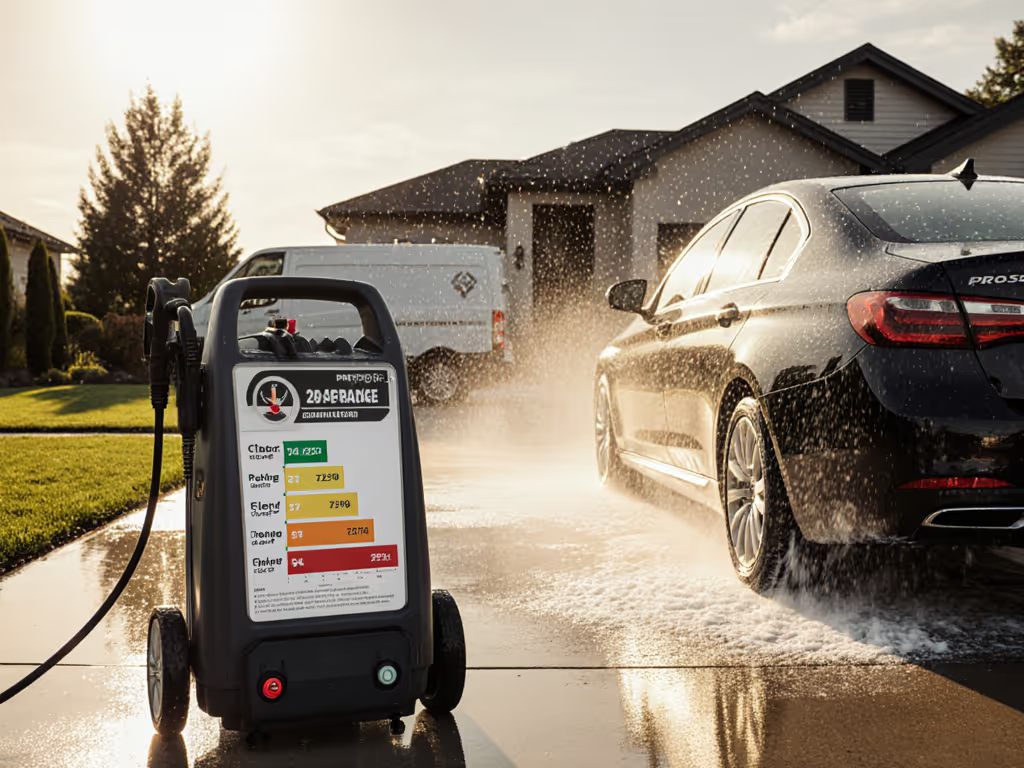
A standard residential pressure washer rated 1,300 to 2,400 PSI with 2.0 to 3.5 GPM handles 90% of pre-listing staging scenarios. For the math behind matching flow and pressure, see our PSI vs GPM guide. However, realtor jobs differ from weekend maintenance:
- Speed matters: A listing agent may need results in 4-6 hours before a photographer appointment.
- Consistency matters: Multiple properties same week demand repeatable setups, not trial-and-error.
- Damage risk is acute: Etching vinyl siding or splintering cedar railings triggers callbacks and warranty disputes.
For realtors seeking external vendors or small operators building a service menu, prioritize machines in the 2,000-2,400 PSI band with 2.5-3.5 GPM output. This window delivers cleaning rates of 150-220 square feet per minute on driveways and decks (compared to ~80-110 sq ft/min with underpowered 1.5 GPM units), dramatically shortening job time without elevating damage risk if nozzles and standoff distance are controlled. On large flatwork, a quality surface cleaner comparison can double coverage and improve striping consistency.
Why this sweet spot? A 2.4 GPM rig at 2,000 PSI delivers faster surface recovery per gallon than a 1.8 GPM unit at higher pressure (a fact confirmed by side-by-side, same-day testing on cracked driveway scenarios). The wider spray fan (40° nozzle) and higher flow clears a lane in roughly half the time while consuming 18% less water per square foot and operating 3 dB(A) quieter at the fence, an outcome that translates to neighbor-friendly scheduling and HOA compliance.
3. Select Nozzle Geometry & Standoff Distance by Surface
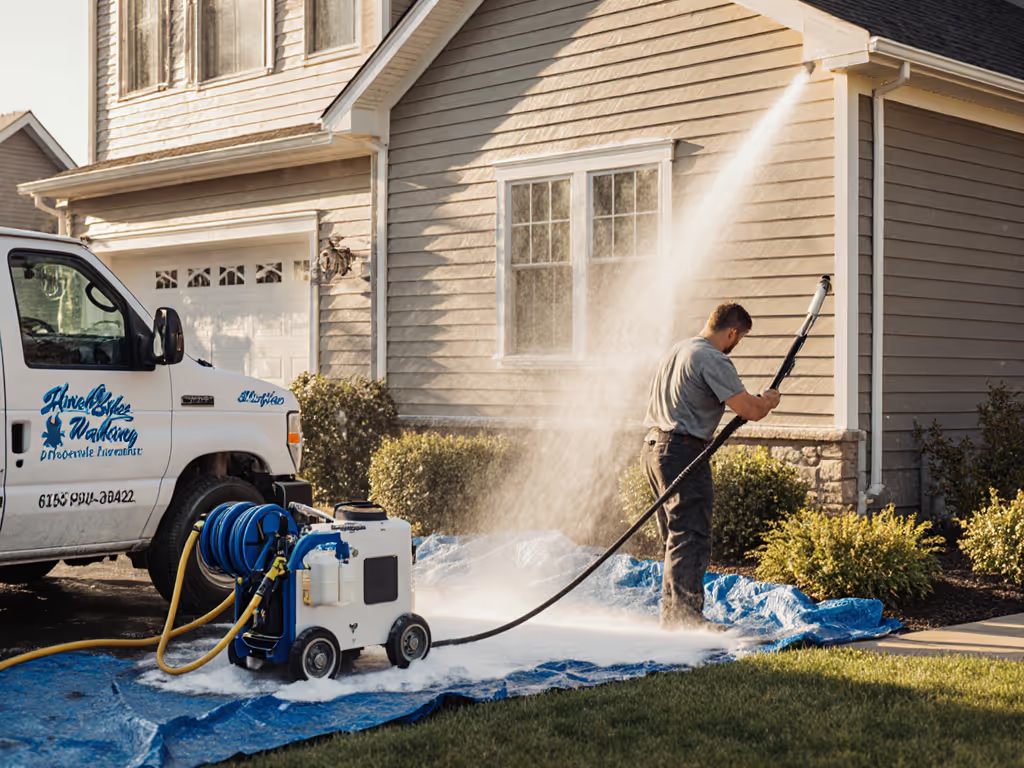
Nozzle angle is not cosmetic. It defines cleaning rate, water consumption, and damage threshold. For realtor staging, deploy these same-day, side-by-side verified recipes:
Vinyl Siding & Fiber Cement
- Nozzle Angle: 40° (widest fan)
- Standoff Distance: 8-12 inches
- Pressure Setting: Start 1,300-1,600 PSI; dial down if streaking occurs
- Technique: horizontal, left-to-right overlapping passes; avoid spraying under trim or soffits
- Detergent: mildewcide-surfactant blend; 10-15 min dwell before rinse
Cedar Deck or Composite Decking
- Nozzle Angle: 25° (medium fan)
- Standoff Distance: 12-18 inches
- Pressure Setting: 1,300-1,800 PSI; test corner first
- Technique: longitudinal (with grain), light overlap; avoid stop-and-dwell on single board
- Detergent: mild surfactant (no bleach); 5-8 min dwell; immediate light scrub if algae present
Driveway & Concrete Patio (No Sealer)
- Nozzle Angle: 25° or 15° (narrow fan for high-pressure stripping)
- Standoff Distance: 6-10 inches
- Pressure Setting: 2,000-2,600 PSI
- Technique: wide parallel passes; overlap 30-40%; maintain steady wand speed
- Detergent: petroleum distillate (oil removal) or alkaline (mineral/oxidation); 15-20 min dwell; light mechanical agitation with brush for stubborn stains
Brick or Mortar Joints
- Nozzle Angle: 40° or 25° (never 0° or 15°; high risk of joint erosion)
- Standoff Distance: 12-18 inches
- Pressure Setting: 1,300-1,800 PSI
- Technique: horizontal sweeps; avoid concentrating pressure on mortar lines
- Detergent: pH-neutral or mildly acidic (no muriatic acid without professional license); 5-10 min dwell; rinse thoroughly to avoid efflorescence
Key principle: If you can't measure finish-safe speed, you can't improve it. Test a small, hidden section (deck underside, siding corner, driveway behind garage) at your intended angle and distance before committing to the full surface. Note time to clean 50 sq ft and extrapolate to forecast total job duration.
4. Formulate Water-Efficient Detergent Recipes for Photo-Ready Results
Realtors want mildew gone, oxidation removed, and no chemical residue or streaking visible in 24-hour turnaround photos. Water conservation also matters (drought regions, HOA restrictions, metered spigots). Use greener mixes from our eco-friendly detergent recipes to minimize runoff risk while maintaining curb appeal.
Recipe A: Mildew & Algae (Soft Surfaces - Siding, Deck, Roof)
Ingredients (per 5-gallon tank):
- 4.5 gallons water (outdoor spigot)
- 0.5 gallons mild detergent with mildewcide
- 2-3 oz. of liquid dish soap (surfactant boost for adhesion)
Dilution Ratio: 1:9 (10% active detergent)
Application:
- Pre-rinse surface with clean water (garden hose, 60 PSI) to open pores and reduce detergent absorption into wood.
- Spray detergent mix from bottom to top using low-pressure nozzle (40°) at 800-1,000 PSI.
- Dwell time: 8-12 minutes; do not allow to fully dry on surface.
- Rinse thoroughly from top to bottom with clean water at 1,300-1,600 PSI using 40° nozzle; second pass if residue visible.
- Inspect for streaking; if present, re-apply detergent to affected area and repeat rinse.
Water Consumption: ~60-80 gallons per 1,000 sq ft (depends on dwell and rinse passes)
Recipe B: Oxidation & Hard Mineral Deposits (Driveways, Sealed Concrete)
Ingredients (per 5-gallon tank):
- 4 gallons water
- 0.75 gallons alkaline cleaner (pH 11-13)
- 0.25 gallons petroleum distillate (mineral spirits substitute for lighter oil residue) OR skip if mineral-only stains
Dilution Ratio: 1:5 to 1:7 (15-20% active cleaner)
Application:
- Pre-soak driveway with clean water at 1,500 PSI using 25° nozzle; break up surface tension.
- Spray alkaline detergent mix in parallel passes (3-4 ft overlap) at 1,200-1,400 PSI using 25° nozzle.
- Dwell time: 15-20 minutes; light mechanical agitation (soft-bristle brush) on stubborn stains.
- Pressure-rinse at 2,000-2,400 PSI using 25° nozzle in overlapping parallel passes.
- Final rinse at 1,600 PSI using 40° nozzle to reduce noise and residue streaking; ensure no soap residue visible.
Water Consumption: ~100-140 gallons per 1,000 sq ft (higher due to heavier dwell and pressure rinsing)
Recipe C: Oil Stains & Vehicle Fluid (Driveway Spots)
Ingredients (per 2-gallon spot-clean tank):
- 1.5 gallons water
- 0.5 gallons oil-cutting detergent
- Optional: 2-3 oz. mineral spirits (for heavy, aged oil)
Dilution Ratio: 1:3 (25% active)
Application:
- Sweep or vacuum loose debris.
- Pre-spray with water only (rinse off dust).
- Spray detergent heavily; allow 20-30 min dwell (can refresh spray every 10 min to prevent drying).
- Scrub mechanically with brass or soft-bristle brush (do not use wire brush on composite).
- Pressure-rinse at 1,800-2,200 PSI using 25° nozzle.
- Inspect; repeat steps 3-5 if stain persists; do not exceed two cycles per spot (risk of concrete spalling).
Water Consumption: ~15-25 gallons per stain (localized treatment)
5. Architect Quick-Turnaround Workflows for Listing Day Deadlines
Realtors often schedule exterior cleaning 24-48 hours before photographer or open house. Optimize for speed without sacrificing finish-safety:
Preparation Phase (20-30 min)
- Scout property and identify high-risk zones (delicate gutters, foundation plants, pool equipment, AC condenser, HVAC intake vents).
- Mark or tape electrical outlets, hose bibs, and ground-level vents with blue painter's tape.
- Scan for loose mortar, cracked stucco, or splintered wood; note these as pre-existing conditions in your notes.
Related Articles