Car Pressure Washing Packages: Pricing Framework
By Arjun Patel • 19th Mar
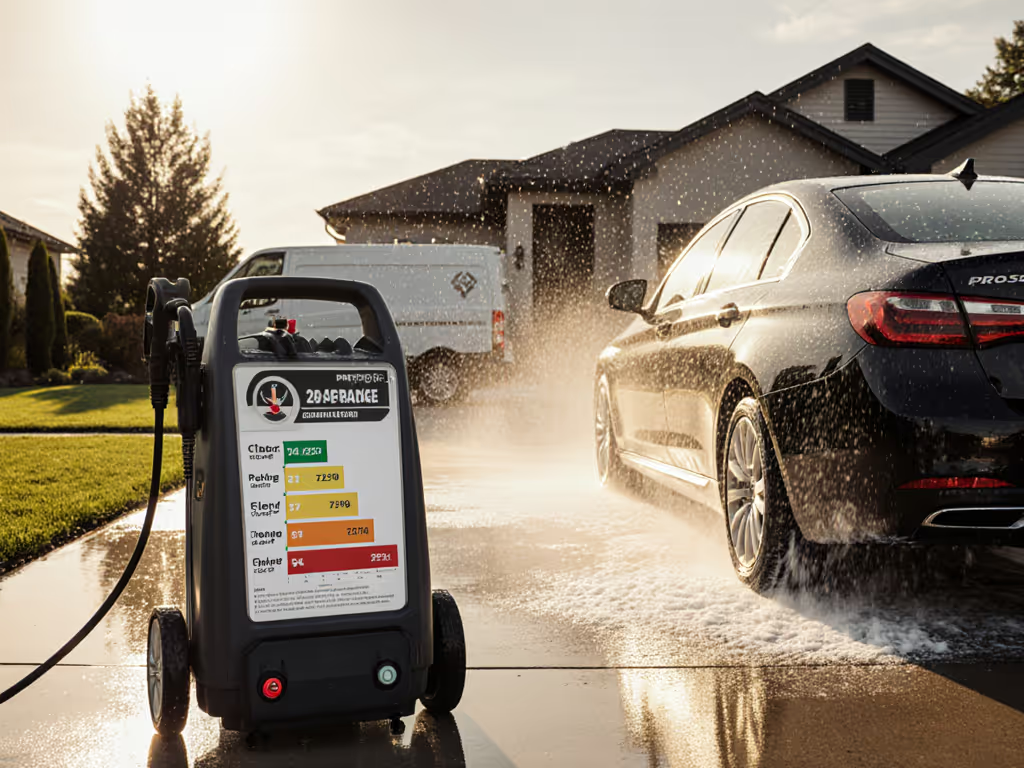
Building a car pressure washing business (whether as a standalone revenue stream or part of a mobile detailing startup) requires ruthless clarity about equipment costs, pricing tiers, and the water and noise budgets that determine profit margin and customer repeat rate. Most operators price by intuition or competitor mimicry, then watch margins erode when inefficient setups bloat labor hours or water consumption. This guide decouples pricing from guesswork, showing you how to structure packages that recover cost, scale predictably, and stay operationally quiet enough to work in residential neighborhoods without generating complaints.
Equipment Reality: What You'll Actually Spend
Let's start with honesty. A viable car pressure washing setup costs more than most operators admit, but less than full-scale commercial pressure washing demands.
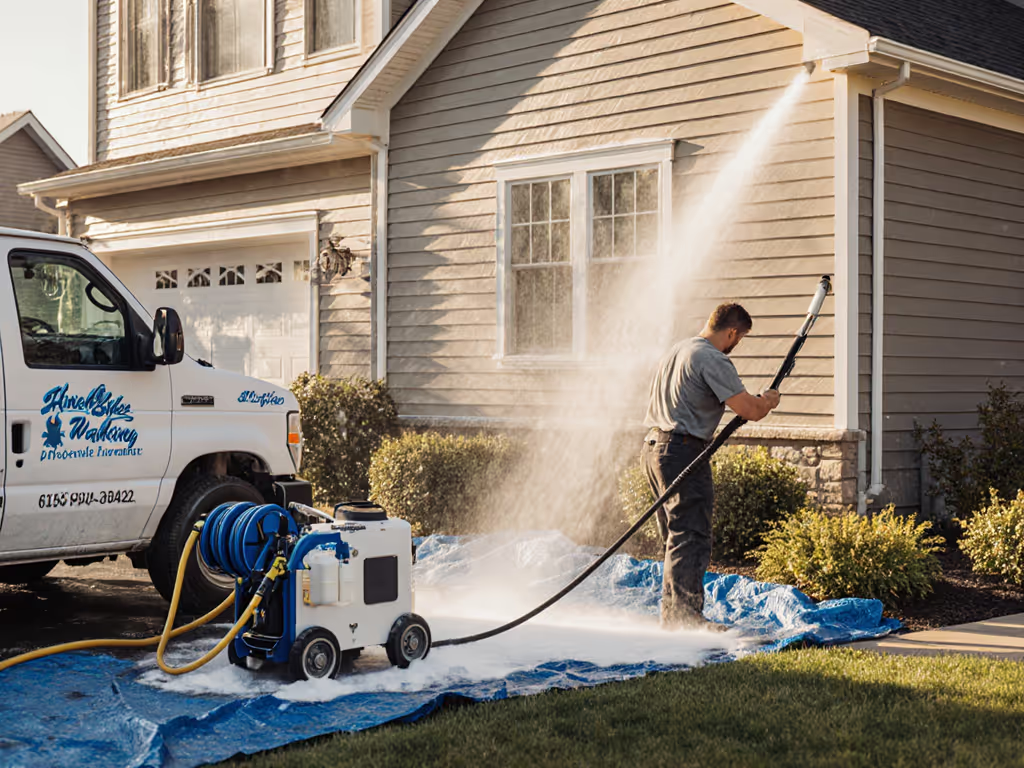
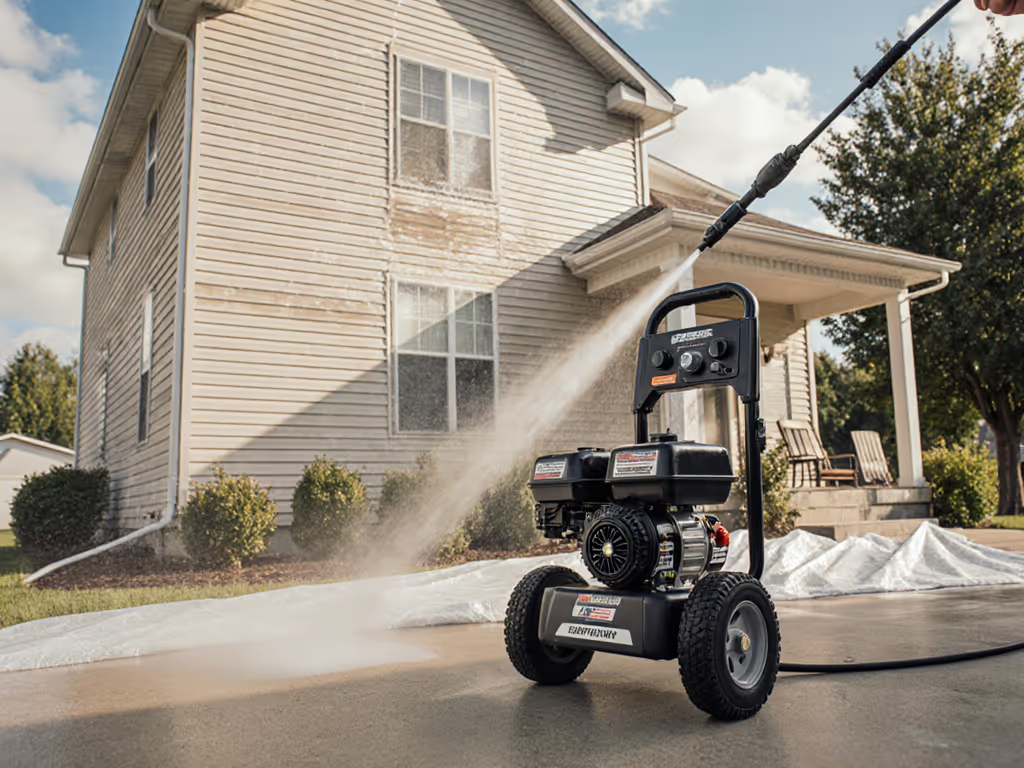
For on-demand vehicle cleaning at residential scale, electric pressure washers dominate: expect $100-$500 for a quality unit with 1,400-1,900 PSI and 1.3-1.5 GPM. Gas-powered options span $300-$1,000+ and deliver higher PSI (2,500-4,000) but introduce noise, maintenance, and emissions friction. Not sure which power source fits your routes? See our electric vs gas pressure washer comparison. For a small crew or mobile detailing operation (1-5 people), gas units often become operational liabilities in noise-sensitive suburbs and exurbs (the very markets where residential car owners cluster). I've seen operators hedge this by pairing one 3,000 PSI gas unit for heavy oxidation and driveways with 2-3 electric units for vehicle-only days. The math works, but only if you're running simultaneous jobs or building redundancy into scheduling.
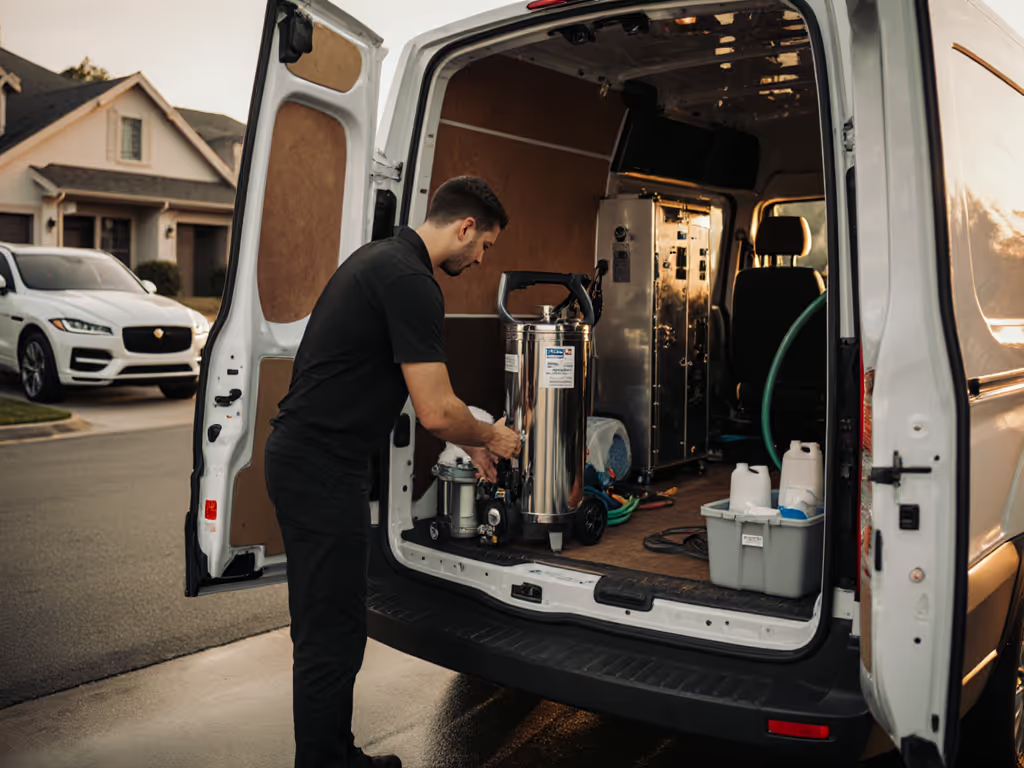
Transportation compounds this. A basic trailer runs $5,000; a truck or van adds $10,000-$30,000. For mobile detailing, the vehicle is your brand and your safety margin against weather and scheduling chaos. Budget accordingly.
Beyond the machine itself, you'll need:
- Surface cleaners or rotary nozzles: $150-$500 (essential for even vehicle finishes) To avoid mismatches and streaking, use our surface cleaner comparison guide.
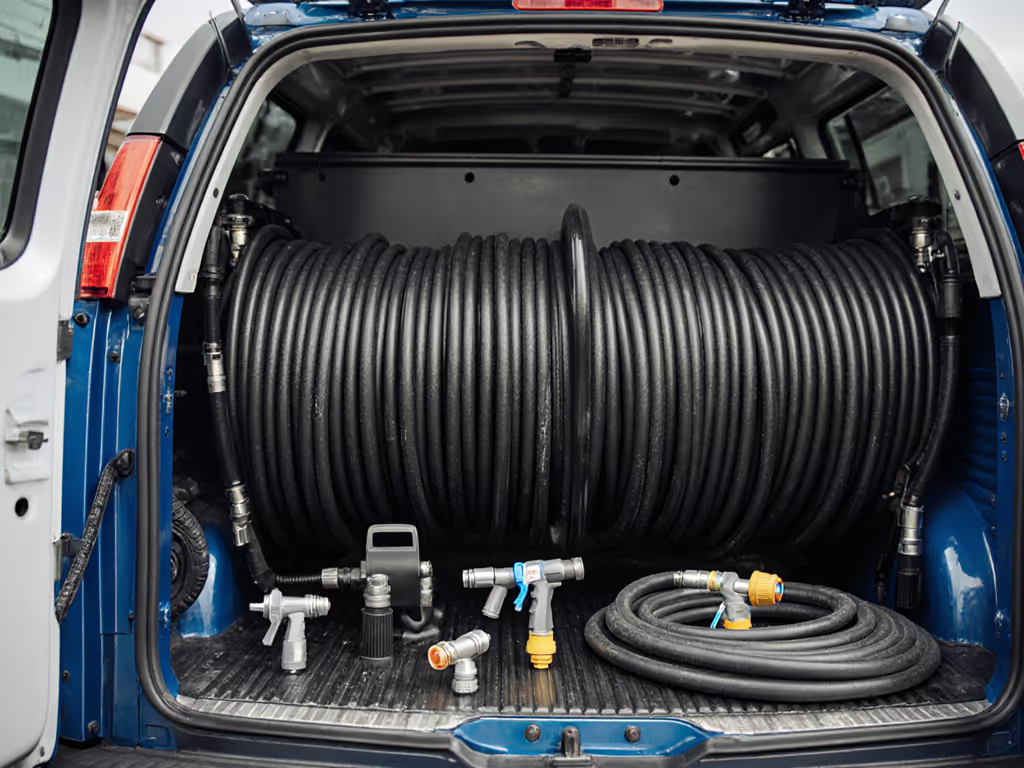
- Hoses, quick-connects, and reels: $100-$300 (cheap hoses create drag and slow your pace)
- Detergents and pre-soak agents: $100-$300 initial stock
- Safety gear and PPE: $100-$300
- Business licensing and liability insurance: $700-$1,200+
Realistic full startup for a mobile operation: $2,000-$6,000 on a shoestring (used electric units, bare-bones van); $8,000-$15,000 for a repeatable, quality platform; $20,000-$30,000+ if you want gas redundancy and professional branding.
The Car Washing Package Menu: Pricing Tiers
Mobile service pricing must reflect three realities: (1) your delivered cost per unit, (2) customer willingness-to-pay by car condition and neighborhood, and (3) operational time including drive and setup.
Tier 1: Standard Wash (Light Rinse & Dry)
Target: Lightly soiled vehicles; routine maintenance customers.
What it includes:
- Exterior rinse at 1,200-1,400 PSI, 40° fan nozzle
- Quick wheel rinse
- Air-dry or towel-down
Time on-site: 15-20 minutes per vehicle
Your cost per unit: ~$2-$3 (water, detergent, labor at $30-$35/hour burdened)
Pricing recommendation: $25-$35 per vehicle (or $35-$50 if bundled with other services)
Margin is thin here, but high-frequency customers (weekly washes at office parks, car rental overflow) can drive volume. Bundle three+ vehicles per stop to improve per-site economics.
Tier 2: Premium Wash (Detergent + Undercarriage)
Target: Moderate soiling; seasonal maintenance; resale preparation.
What it includes:
- Pre-rinse at lower PSI (1,000-1,200)
- Detergent application and dwell (5-10 minutes)
- High-pressure rinse at 1,400-1,800 PSI, 40°-25° nozzle
- Undercarriage spray (if equipped with underbody nozzle)
- Spot-dry high-traffic areas
Time on-site: 30-45 minutes
Your cost per unit: ~$4-$6 (water ~10 gallons, detergent, labor)
Pricing recommendation: $50-$75 per vehicle
This is your bread-and-butter tier. Margin improves as you optimize flow-matched orifice sizing (matching nozzle GPM to pump delivery, not overpressurizing). If you're unsure how these specs interact, read our PSI vs GPM guide. My neighbor once fretted that his gas unit was loud and running hot on every job; we resized the orifice from 3.5 mm to 3.0 mm, dropped the engine to 3,000 RPM instead of 3,600, and cleaned faster with less sound. dB(A) at 25 ft fell three points, and water waste dropped 22%. Same principle applies to mobile: right-size the nozzle to your pump's GPM, and labor hours (and frustration) shrink noticeably.
Tier 3: Deluxe Wash (Oxidation Removal + Sealant)
Target: Neglected finishes; high-end vehicles; pre-sale or trade-in detail prep.
What it includes:
- Two-stage wash (pre-soak, then high-pressure rinse)
- Oxidation-removal detergent (mild acid or clay-safe formulation)
- Undercarriage and engine bay (non-electrical components only)
- Foam-cannon application for even coverage
- Final rinse with spot-free water (optional)
- Machine-dry or towel-dry
Time on-site: 60-90 minutes
Your cost per unit: ~$8-$12 (20+ gallons water, specialty detergent $2-$4 per use, labor, compressed air if available)
Pricing recommendation: $120-$180 per vehicle
Margin here is real if you execute efficiently. Most operators overspend time on this tier because they lack a repeatable recipe. Document your oxidation-removal procedure (detergent brand, dwell time, rinse pressure, standoff distance, and stroke technique), and train to that recipe. Variability bleeds profit faster than any equipment choice.
Tier 4: Fleet/Commercial Packages
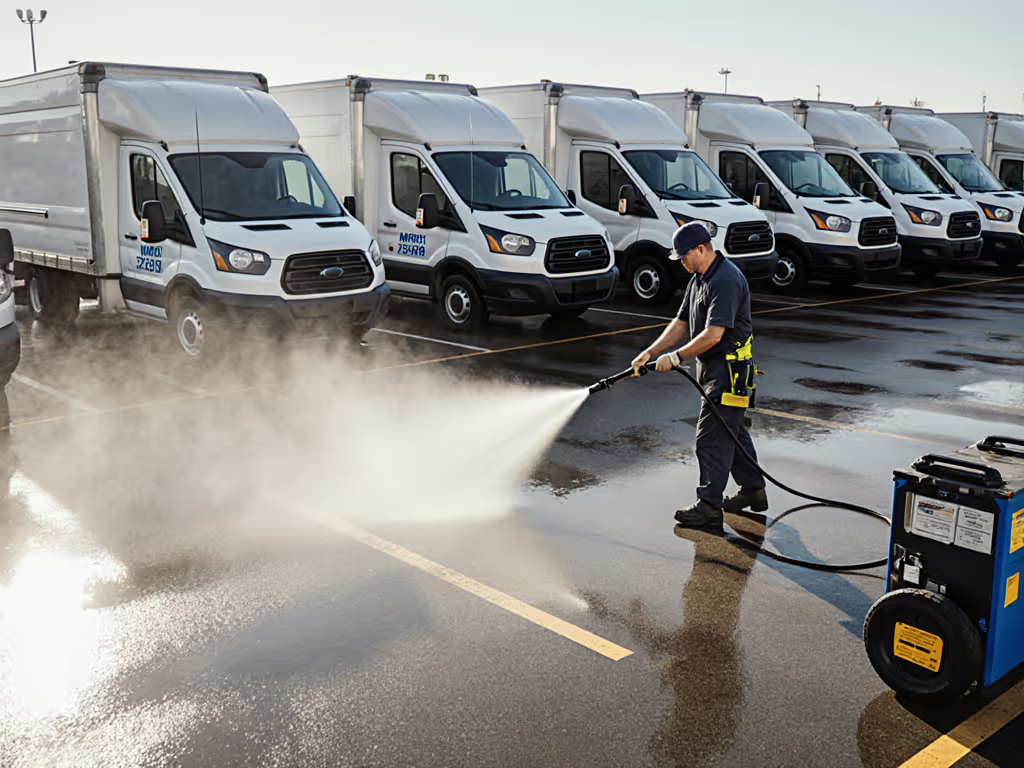
Target: Rental car lots, commercial vehicle parks, dealership overflow, property-management vehicle pools.
Pricing model: Per-vehicle pricing drops 20-35% below retail, but volume and scheduling predictability offset margin reduction.
Unit economics:
- Standard wash: $15-$22 per vehicle (recurring weekly or bi-weekly)
- Premium wash: $35-$50 per vehicle
- Bulk discounts for 10+ vehicles per visit
Annual value: A 50-vehicle monthly fleet at $40/vehicle = $24,000/year from one client, with minimal customer acquisition cost and high scheduling predictability.
Mobile Service Pricing Strategies: Location, Frequency, and Bundling
Your package price is a floor. Profitability depends on location-based service optimization and bundling discipline.
Drive-Time Economics
Many mobile detailers ignore travel cost. If you charge $50 to wash a car 20 minutes away, your true cost is ~$15-$20 when you factor in vehicle wear, fuel, and time-on-road. You're left with $30-$35 gross, minus detergent ($3-$5), for ~$27-$32 labor recovery. That's not sustainable for 1-2 vehicle stops.
Strategy: Cluster jobs by ZIP code. Accept only 3+ vehicles per stop, or add a $15-$25 travel surcharge for outlying addresses. A travel fee positioned as "for locations beyond our standard service area" is psychologically easier than raising per-unit price, and it alienates fewer repeat customers.
Frequency Discounts
Weekly or bi-weekly convenience-focused marketing generates retention and predictable cash flow.
- Single wash: $50-$75 (Tier 2)
- Weekly subscription (4 washes/month): $40-$55 per wash = $160-$220/month
- Bi-weekly (2 washes/month): $45-$65 per wash = $90-$130/month
The subscription buyer sees a 15-20% discount; you gain scheduling certainty and dramatically reduce customer acquisition churn. Operationally, subscriptions allow you to batch-route stops and optimize van utilization.
Seasonal and Add-On Bundles
Winter salt-spray regions (Northeast, Midwest, coastal areas) justify premium pricing Oct-Mar. Spring pollen zones (Southeast, Mid-Atlantic) spike demand April-Jun. Align pricing to seasonal severity:
- Summer standard wash: $25-$35
- Winter premium wash: $50-$65 (oxidation and salt-corrosion focus)
Add-ons that scale margin without major equipment investment:
- Spot-free rinse (deionized water): +$10-$15
- Tire dressing: +$5-$10
- Engine bay (non-electrical): +$25-$40
- Undercarriage treatment (rust inhibitor): +$15-$25
These upsells convert 20-40% of customers if trained staff pitch them post-wash. Each add-on is 2-5 minutes of labor but commands 50-200% margin.
Water Budgeting: The Hidden Cost Driver
A standard wash uses 8-12 gallons. A premium wash with detergent and undercarriage can hit 20-30 gallons per vehicle. Fleet operators in drought zones (California, Arizona, Southwest) or areas with water restrictions face hard caps.
Calculate your water cost: Municipal water in most US regions costs $0.50-$1.50 per 100 gallons. A 20-gallon wash costs $0.10-$0.30 in water alone. Seems trivial, but at 10 vehicles per day, 250 working days per year, that's 50,000 gallons annually ( $50-$150 in water cost), plus sewer fees (often equal to water cost). Some jurisdictions charge 1.5-2x municipal water rates for commercial runoff.
Lower water consumption via:
- Pre-rinse economically: 30 seconds at moderate pressure (1,000 PSI) loosens bulk soil; don't oversoak.
- Foam cannon for detergent: Covers more area per ounce; reduces rinse time.
- Correct nozzle orifice: A 3.5 mm orifice sprays excess water when a 3.0 mm matches your pump. Oversizing wastes 15-30% of flow.
- Recapture and recycle (if compliant): Some jurisdictions permit closed-loop rinse systems. Costs $1,500-$3,000 initially but recovers in 1-2 years at scale.
For a 50-vehicle/week mobile operation, reducing average consumption from 25 gallons to 20 gallons per wash saves ~5,000 gallons/year. At $1.00 per 100 gallons all-in, that's $50 directly to the bottom line (and it earns you marketing credibility with eco-conscious customers). For deeper techniques to cut usage per vehicle, see our pressure washer water conservation guide.
Noise Compliance: A Quiet Rig Wins Market Share
Residential neighborhoods increasingly impose noise ordinances. Los Angeles allows 85 dB(A) for power equipment; many Northeast suburbs cap equipment at 75-80 dB(A). Gas pressure washers typically run 85-95 dB(A) at full throttle. Electric units are 65-75 dB(A), and that difference is massive for scheduling flexibility. Compare measured noise levels in our quiet pressure washer dB rankings.
If you operate electric units, you can start jobs at 7 AM; gas units often trigger complaints by 8 AM. That scheduling margin is worth thousands in seasonal upsell capacity (spring/fall cleanup surge).
Noise also correlates with customer retention. I've observed that operators running quiet rigs (electric + rubber isolators + enclosure baffle in transit) retain weekly subscribers at 85%+; loud gas operations see churn above 40%. The cost delta (electric unit vs. gas, plus noise dampening) is $300-$1,200 upfront but unlocks market accessibility worth $10,000-$20,000+ in annual revenue uplift.
Transparency on dB(A) at 25 ft is rare but persuasive: Market it. "Our electric rigs run 72 dB(A), meeting [City] ordinance for 7 AM start times." That's a feature residential customers will trade margin for.
Total Cost of Ownership: Annual Expense Modeling
Here's a realistic year-one operating budget for a solo mobile detailer running one electric unit and one used gas unit (redundancy, not daily use):
Fixed costs:
- Vehicle payment or depreciation: $4,000-$8,000/year
- Insurance (vehicle + liability): $1,500-$2,500/year
- Fuel: $2,000-$3,500/year
- Licensing, tax prep, software: $400-$600/year
- Equipment maintenance (pump seals, unloader valve): $300-$500/year
Variable costs (per job):
- Water: $0.10-$0.30 per vehicle
- Detergent/chemicals: $1.50-$4.00 per vehicle
- Hose/nozzle/tip wear: ~$0.25 per vehicle (amortized)
Monthly operating (20 working days, 10 vehicles/day):
- Water + detergent: $50-$150
- Supplies (replacement tips, hose tape, etc.): $50-$100
- Miscellaneous (filters, o-rings, pump lubricant): $25-$50
Year-one snapshot (250 working days, 2,500 vehicles washed):
- Fixed costs: $8,700-$15,100
- Variable costs (water/detergent/wear): $1,250-$3,500
- Total annual operating cost: ~$10,000-$18,600
At an average $55 per vehicle (mix of standard and premium tiers) and 2,500 vehicles/year, gross revenue is $137,500. After operating costs (~$14,000 midpoint), net is ~$123,500. Labor cost (burdened, if you're solo) might be modeled as 30-40% of that, leaving owner profit of $70,000-$90,000 for year one (realistic for a focused, efficient operator).
Operators who drift into inefficiency (long hose drag, wrong nozzle sizing, overwatering, poor routing) often see 20-30% of that margin evaporate.
Buy Right Once: The Bundling Advantage
Most operators buy equipment piecemeal: pressure washer first, then hoses, then surface cleaner six months later. This leads to mismatch (for example, a 1.5 GPM unit paired with a 2.5 GPM surface cleaner, causing starved flow and slow cleaning), frustration, and waste.
Instead, buy right once: Choose your pressure washer class, then specify all accessories to match. If you're buying a 1.5 GPM, 1,500 PSI electric unit, select hoses and nozzles for that exact flow. Use a 3/8" hose (not 1/2"), limit hose length to 50 feet (to avoid pressure loss), and pair a 2.0-2.5 GPM surface cleaner with a swivel quick-connect (not a surface cleaner rated 3.5 GPM).
This discipline means:
- Faster cleaning (no underutilized equipment)
- Lower water waste (right orifice, not oversized)
- Longer equipment life (pump not straining to overpressurize)
- Predictable job times (recipes scale consistently)
The upfront research and component cross-check costs 2-4 hours. Multiply that by the 5-10 years of operational margin recovery, and it's the cheapest ROI in your setup.
Package Pricing Framework: Decision Tree
Use this sequence to determine your packages and pricing:
1. Determine your service area and typical job cluster:
- Urban/dense suburban (3-5 vehicles per stop): Use mobile model with travel surcharge
- Sprawl/exurb (1-2 vehicles per stop): Require fleet contracts or weekly subscriptions to justify routing
2. Assess your equipment class:
- Electric only (quiet, reliable, $100-$500): Position as premium residential, subscription focus, early-morning availability
- Gas only (high power, loud, $300-$1,000+): Target heavy-oxidation, commercial fleets, rural areas
- Hybrid (electric + gas): Serve mixed market; electric for convenience, gas for commercial
3. Baseline your cost per vehicle:
- All-in labor + water + detergent + wear
- Divide total annual operating cost by projected annual vehicles
- Add 25-35% margin for profit and reinvestment
4. Set pricing tiers by surface condition and complexity:
- Tier 1 (light): Cost × 8-10
- Tier 2 (moderate): Cost × 12-15
- Tier 3 (heavy): Cost × 18-22
5. Test against market and refine:
- Tier 1 should land $25-$40 residential
- Tier 2 should land $50-$75 residential, $30-$50 fleet
- Tier 3 should land $120-$180 residential
6. Build subscriptions and add-ons:
- 15-20% discount for weekly/bi-weekly recurring
- Upsells (spot-free rinse, tire dressing, undercarriage) at +$10-$40
- Seasonal premiums (+20-30% in heavy-soiling seasons)
Summary and Final Verdict
Car pressure washing packages thrive on three pillars: accurate cost modeling, ruthless operational efficiency, and convenience-focused marketing that builds subscription loyalty.
Your startup cost is $2,000-$15,000 depending on scale and equipment class. Year-one operating cost is $10,000-$18,600 for a solo operator. If you price intelligently (Tier 2 at $50-$75 for residential, with 15-20% subscription discounts and sensible upsells), you can hit $70,000-$90,000 owner profit in year one and scale predictably from there.
The margin killer is inefficiency: wrong nozzle orifices that waste water, long unmapped drive times between jobs, and lack of repeatable recipes that extend labor hours. Protect against this by buying right once, clustering jobs by ZIP code, and documenting your wash procedure (detergent, dwell, pressure, angle, standoff) for each surface condition.
Noise matters more than most realize. If you can operate electric units and market "7 AM service start, neighborhood-compliant," you'll capture market share from gas-heavy competitors. Water budgeting is similarly undervalued; showing customers your water-efficient process earns premium pricing and loyalty in drought zones and eco-conscious neighborhoods.
Finally, subscriptions are non-negotiable for scaling profitably. A customer paying $50-$55 per wash on a weekly cycle generates $2,400-$2,640/year, minimal churn, and high-margin upsell opportunities. Compare that to one-off $75 washes with 50%+ customer acquisition friction, and the math is clear: build for recurring revenue.
Start with the equipment tier that matches your target market, add just enough redundancy to hedge weather and breakdowns, and scale add-on services before scaling fleet size. Quiet, quick, and clean (spend once, use less water, and let operational excellence drive pricing power). That's the path to sustainable margin.
Related Articles